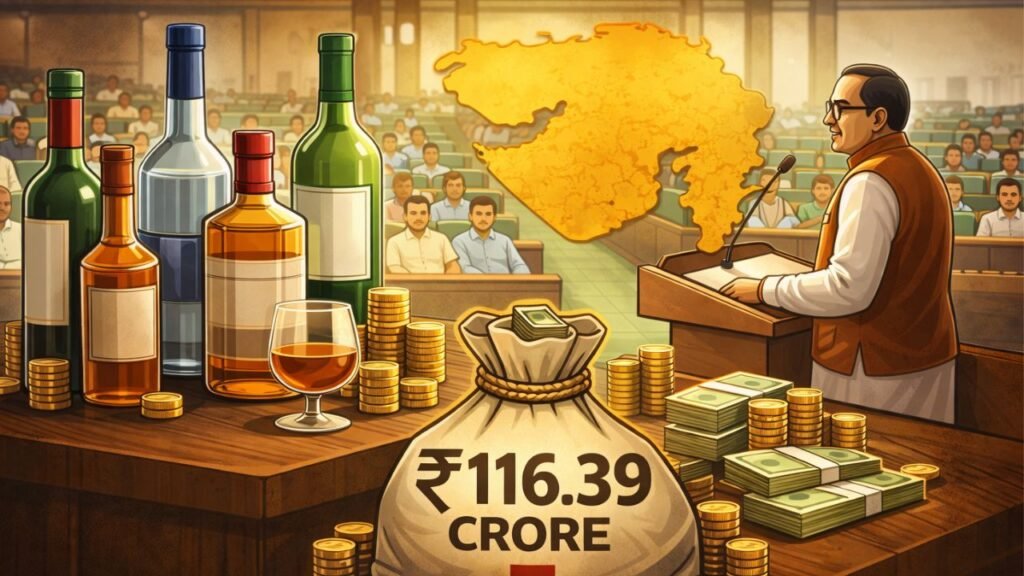
The Gujarat Legislative Assembly’s 2026 Budget Session brought an interesting disclosure to light. The state government revealed that it generated ₹116.39 crore from licensed liquor sales over the past two financial years covering 2024 to 2026.
The figures, shared in a written reply during the session, shed light on the regulated revenue streams operating within a state that officially maintains prohibition. While Gujarat remains a dry state, these earnings come from legally permitted channels under its controlled liquor policy framework.
Revenue Breakdown and Key Figures
Total Revenue
The ₹116.39 crore earned over the two-year period comes primarily from Ahmedabad and Gandhinagar districts. These are the areas where most licensed establishments operate under special provisions.
Licensed Establishments
As of January 25, 2026, there are 32 hotels and resorts in Ahmedabad and Gandhinagar that hold permits to serve liquor under special licensing provisions. These establishments cater mainly to:
- Tourists visiting the state
- Business visitors attending conferences and meetings
- Eligible permit holders who meet legal requirements
The concentration of licensed venues in these two districts reflects their status as Gujarat’s major urban centers and business hubs.
Revenue at a Glance
| Detail | Figure |
| Total Revenue (2 Years) | ₹116.39 crore |
| Primary Districts | Ahmedabad, Gandhinagar |
| Licensed Hotels/Resorts | 32 |
| GIFT City Revenue | ₹94.19 lakh |
| Health Permits (2 Years) | 1,161 new approvals |
Surge in Permit Approvals
The data reveals notable growth in health-based liquor permits over the review period. These permits are issued to residents with valid medical certifications, allowing controlled consumption under legal guidelines.
In Ahmedabad alone:
- 1,161 new applications were approved over two years
- 883 permits were approved in the most recent year alone (January 2025 to January 2026)
This sharp increase in the latest year indicates rising demand under regulated medical and special-use categories. It also suggests growing awareness of the legal pathways available for those who qualify.
Revenue from GIFT City
In addition to hotel-based sales, the government earned approximately ₹94.19 lakh from liquor sales at GIFT City since limited consumption was permitted there in late December 2023.
GIFT City operates under specific regulatory relaxations aimed at supporting international business operations. The fintech hub attracts global professionals and companies, and the limited liquor service is designed to align with international business norms while remaining within Gujarat’s broader prohibition framework.
Context of the Disclosure
The data was provided by the Gujarat Prohibition and Excise Department in response to a query raised during the Assembly session. Such disclosures are routine during budget sessions when legislators seek detailed information on various revenue streams.
Although Gujarat continues to maintain its status as a dry state, regulated revenue is generated through three main channels:
1. Health Permits
These are issued to Gujarat residents who can provide valid medical certifications. The permits allow controlled alcohol consumption under strictly defined legal guidelines. The surge in approvals suggests this route is well-established and increasingly utilized.
2. Visitor and Tourist Permits
Short-term permits are granted to visitors from outside Gujarat and foreign nationals. These allow temporary access to licensed establishments during their stay in the state. The tourism and business travel sectors rely on this provision.
3. Special Economic Zones
Designated areas like GIFT City operate under specific rules where limited liquor service is permitted to support international business activities. This recognizes the needs of global financial institutions operating within these zones while maintaining the broader state policy.
Revenue Sources Under Prohibition
| Source | Description |
| Health Permits | Residents with medical certification |
| Visitor Permits | Tourists and out-of-state visitors |
| Special Zones | GIFT City and designated areas |
| Licensed Hotels | 32 properties in Ahmedabad and Gandhinagar |
Why This Disclosure Matters
The figures shared during the budget session highlight several important aspects of Gujarat’s approach to prohibition.
The scale of regulated revenue – ₹116.39 crore over two years is not a trivial amount. It represents significant earnings from controlled channels that operate within the prohibition framework.
Growing demand for permits – The surge in health permit approvals, particularly the 883 issued in the most recent year, suggests increasing acceptance and utilization of these legal pathways.
Economic significance of hospitality zones – The concentration of licensed establishments in Ahmedabad and Gandhinagar reflects the reality that business travelers and tourists expect certain services. The state has created structured exceptions to meet these expectations without abandoning prohibition as policy.
The Balance Between Policy and Practicality
Gujarat’s prohibition policy has been in place for decades, reflecting the vision of the state’s founding leaders. However, over time, practical considerations have led to carefully defined exceptions.
The health permit system acknowledges medical needs. The visitor permit system recognizes tourism realities. The GIFT City provisions address international business requirements.
Each exception operates within clear boundaries. Permits are not handed out freely. Establishments must meet strict criteria. Revenue is tracked and disclosed. The system is designed to be controlled rather than open-ended.
The ₹116.39 crore figure demonstrates that this controlled approach generates revenue while maintaining the broader policy framework. It’s a balance that has evolved over years of administrative experience.
Looking Ahead
The disclosure during the budget session puts a number on what many already suspected – that regulated liquor sales under Gujarat’s prohibition framework represent a meaningful revenue stream. With permit approvals rising and GIFT City adding to the total, future figures may well exceed current levels.
For policymakers, the challenge lies in maintaining the balance between prohibition principles and practical realities. For the hospitality industry, the licensed establishments provide a way to serve visitors while complying with state law. For permit holders, the system offers a legal pathway that meets their needs.
As Gujarat continues to develop as a business and tourism destination, these regulated channels are likely to remain part of the state’s unique approach to prohibition.