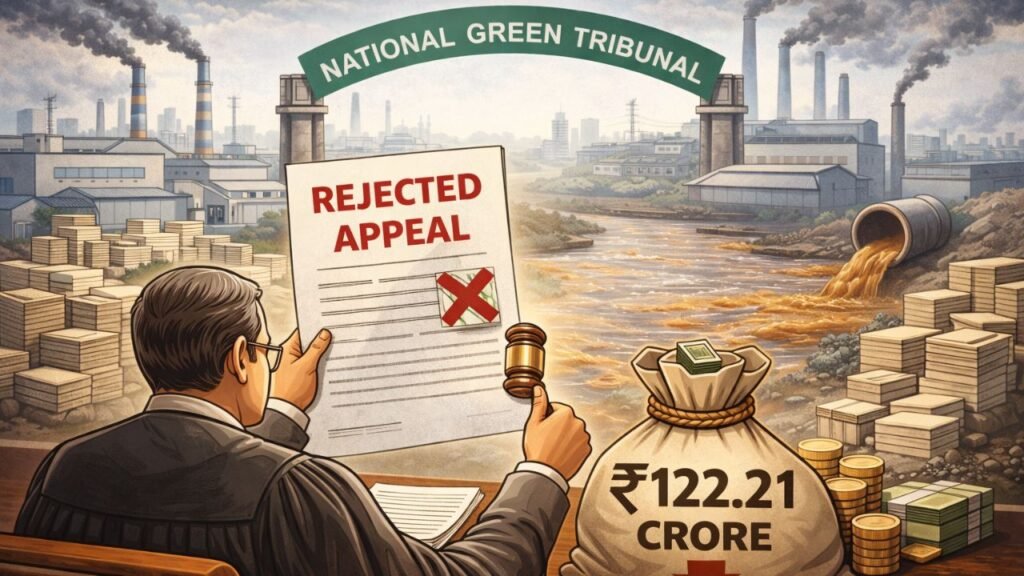
In a significant ruling on February 26, 2026, the National Green Tribunal delivered a major setback to Gujarat’s Morbi ceramic industry. The tribunal dismissed an appeal filed by 337 industrial units against a substantial environmental compensation penalty, reinforcing the “polluter pays” principle.
The decision mandates collective payment of ₹122.21 crore for past environmental violations, sending a clear message about accountability even for historical damage.
Core of the Dispute
The Fine
The total environmental compensation amounts to ₹122.21 crore, applicable to 337 ceramic manufacturing units operating in the Morbi–Wankaner region. The penalty relates to environmental damage caused before regulatory enforcement was tightened in 2019.
The Cause
The compensation stems from the prolonged use of unauthorized coal gasifiers by these industrial units. According to tribunal findings, this practice led to:
- Severe air pollution affecting surrounding areas
- Soil contamination in and around the industrial cluster
- Ecological degradation across the Morbi ceramic belt
Coal gasifiers were widely used by manufacturers before authorities imposed stricter environmental controls and pushed for cleaner fuel alternatives. The transition to cleaner technologies came only after regulatory pressure intensified.
Case Overview
| Detail | Information |
| Affected Units | 337 ceramic manufacturers |
| Total Fine | ₹122.21 crore |
| Location | Morbi–Wankaner region |
| Violation Period | Before 2019 (pre-regulation tightening) |
| Cause | Unauthorized coal gasifier use |
| Tribunal | NGT Principal Bench |
| Ruling Date | February 26, 2026 |
The Tribunal’s Ruling
The NGT’s Principal Bench rejected the plea for relief with observations that leave little room for ambiguity.
Past environmental damage must be compensated. The tribunal made it clear that damage already done cannot be ignored simply because industries have since changed their ways.
Compliance achieved after violations does not erase earlier harm. Shifting to cleaner technologies after years of pollution does not wipe the slate clean. The environmental impact occurred, and responsibility remains.
The polluter pays doctrine remains central to environmental jurisprudence. This principle, long established in environmental law, requires those who cause damage to bear the cost of remediation.
The decision underscores that accountability follows violations regardless of when they occurred or whether the industry has since improved its practices.
Impact on the Morbi Ceramic Cluster
Financial Strain on Units
The ruling comes at a particularly challenging time for the ceramic industry. Units are already grappling with:
- Elevated natural gas prices affecting production costs
- Intense global competition squeezing margins
- Export market fluctuations creating uncertainty
For many small and medium enterprises operating in the cluster, the fine represents a significant financial burden. The collective ₹122.21 crore, when divided across 337 units, still amounts to substantial individual liability that could strain working capital and affect operations.
Compliance and Transition to Cleaner Energy
Over the past few years, most units in Morbi have shifted to Piped Natural Gas and other cleaner technologies. This transition was driven by regulatory mandates and growing awareness of environmental responsibilities.
While air quality in the region has reportedly improved following this shift, the tribunal emphasized that historical violations still require financial restitution. Good behavior today does not excuse pollution from yesterday.
Industry Context
| Factor | Details |
| Morbi’s Global Rank | World’s second-largest ceramic hub |
| India Production Share | Over 90% of national output |
| Products | Tiles, sanitaryware, ceramic products |
| Markets Served | Domestic construction, global exports |
| Workforce | Thousands employed |
Possible Legal Recourse
Industry associations in Morbi are reportedly considering approaching the Supreme Court of India to challenge the NGT’s dismissal. The ceramic cluster has strong representative bodies that have previously intervened in policy matters affecting the sector.
However, any further appeal would require strong legal grounds and could extend the litigation timeline significantly. The NGT’s observations are detailed and leave little room for reinterpretation. A Supreme Court challenge would need to identify procedural errors or jurisdictional issues rather than reargue the merits of the case.
Industry Context
Morbi holds a unique position in India’s industrial landscape. The city is recognized as the world’s second-largest ceramic manufacturing hub, contributing over 90 percent of India’s ceramic production.
The sector’s significance extends beyond output numbers:
- It employs thousands of workers directly and indirectly
- It supplies the domestic construction market with tiles and sanitaryware
- It exports products to global markets, earning valuable foreign exchange
- It supports a vast ecosystem of suppliers, transporters, and service providers
The shift from coal-based fuel to natural gas in recent years has improved environmental standards significantly. But as the tribunal noted, legacy legal liabilities continue to affect the industry despite this progress.
Why This Ruling Matters
The NGT’s decision carries implications that extend beyond Morbi’s ceramic cluster.
Environmental compliance is non-negotiable. Industries across the country are watching this case. The message is clear – environmental rules are not optional suggestions but binding requirements.
Retrospective accountability can carry heavy financial consequences. Even if violations occurred years ago and have since been corrected, the financial liability remains. Industries cannot escape responsibility simply by cleaning up after the fact.
Industrial clusters must adopt sustainable practices proactively. Waiting for regulatory enforcement before making changes leaves industries exposed to retrospective penalties. Proactive adoption of clean technologies is not just good for the environment – it’s good business risk management.
For Morbi’s ceramic sector, the ruling may influence future investment decisions, fuel strategy choices, and regulatory compliance frameworks. The financial hit from this penalty will be felt across the cluster, but the reputational impact could be longer lasting.
The world’s second-largest ceramic hub will now have to balance its global ambitions with the environmental responsibilities that come with industrial scale.