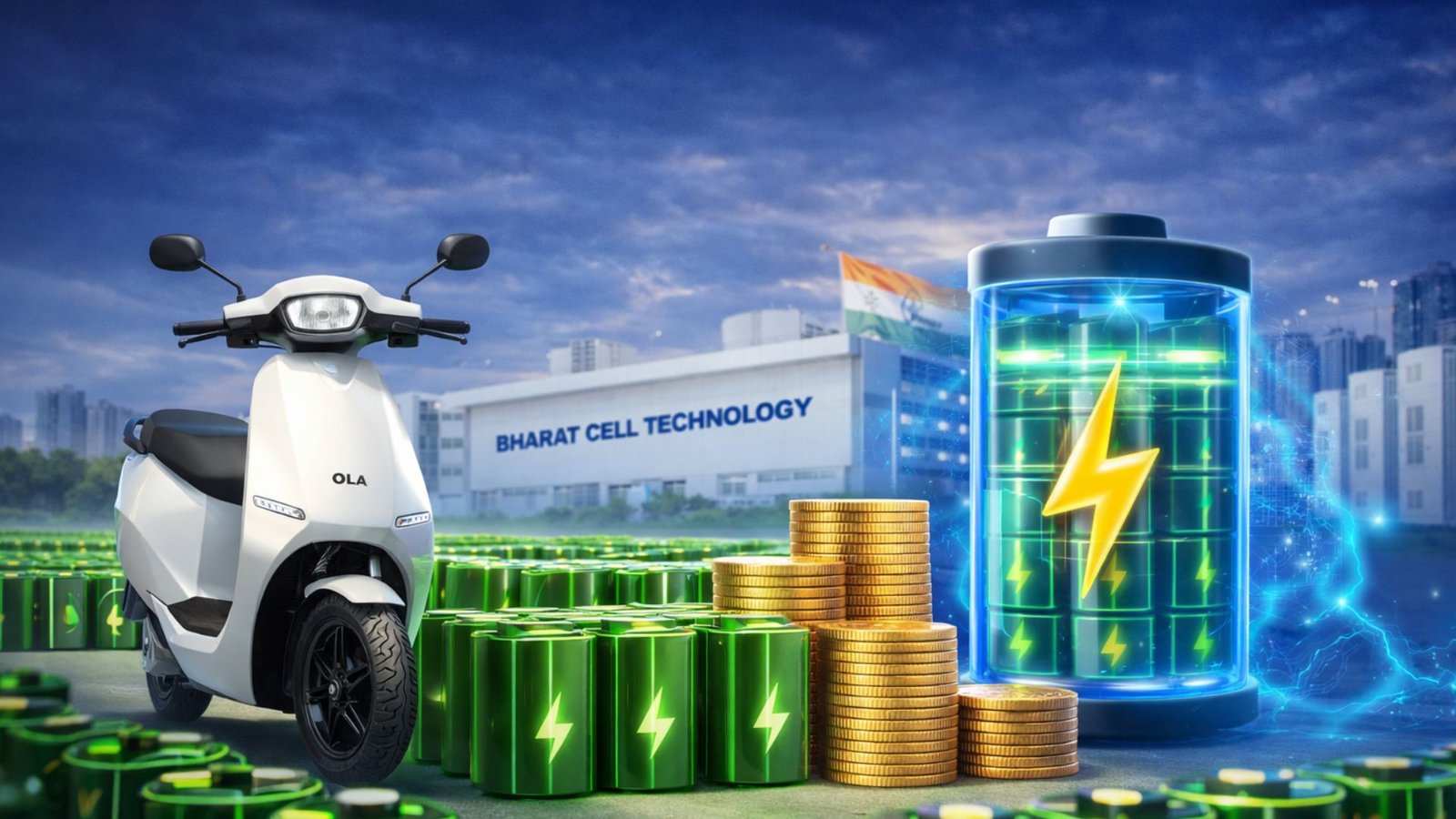
Ola Electric is making a bold move in March 2026. The company is planning a ₹2,000 crore stake sale in its battery subsidiary Ola Cell Technologies while simultaneously expanding into home energy storage and pushing forward with its indigenous Bharat Cell technology. Here’s the complete picture of what’s changing and why it matters.
The electric vehicle space in India has seen plenty of action over the past few years. But what Ola Electric is attempting right now goes beyond just selling scooters. The company is quietly restructuring its entire approach to batteries, and the decisions made in 2026 could determine where it stands a decade from now.
Let’s break down everything – the stake sale, the battery technology, the new energy storage products, and the challenges the company faces along the way.
Why Ola Electric is Restructuring Its Battery Business Right Now
To understand what Ola is doing, you need to understand why batteries matter so much in the EV world.
Batteries aren’t just components. They’re the most expensive part of any electric vehicle. They determine range, performance, safety, and ultimately, customer satisfaction. Companies that control their battery supply control their destiny.
Ola’s vision has always been about building an integrated EV ecosystem. Not just assembling scooters from imported parts, but actually making the core technology in-house. The battery division sits at the heart of that vision.
The restructuring happening now focuses on several goals:
- Reducing how much Ola depends on imported battery cells from other countries
- Building a complete EV ecosystem where key components come from within the company
- Improving financial stability after the stock has faced significant pressure since its IPO
- Expanding beyond vehicles into non-vehicle energy solutions like home backup systems
Battery manufacturing is brutally expensive. Setting up production lines, securing raw materials, hiring skilled engineers, and continuously improving technology requires massive investment. Ola is now aligning its strategy to balance ambitious growth with financial discipline.
₹2,000 Crore Stake Sale: What’s Being Planned
The biggest news coming out of Ola Electric right now is the planned ₹2,000 crore stake sale in Ola Cell Technologies, the subsidiary handling battery manufacturing.
Key Details of the Stake Sale
The company aims to raise up to ₹2,000 crore by selling a minority stake in its battery business. This isn’t about giving up control – it’s about bringing in partners who can fund the next phase of growth while Ola retains majority ownership.
Who’s Handling the Deal
Ola has brought in serious players to manage this process:
- Avendus Capital – One of India’s leading investment banks with deep experience in fundraising and M&A
- Motilal Oswal – A major financial services group with strong investor connections
These firms are now working to identify suitable investors and structure the deal in a way that makes sense for both Ola and the new partners.
Who Ola is Targeting
The company isn’t looking for just anyone with money. They’re targeting specific types of investors:
- Global infrastructure investors who understand long-term capital-intensive projects
- Sovereign wealth funds with patient capital and strategic vision
- Long-term strategic partners who bring more than just money to the table
This approach reflects confidence in India’s EV and battery market. International investors have been watching India closely, and Ola wants to give them an entry point into what could be a massive growth story.
What the Money Will Fund
The ₹2,000 crore isn’t just sitting in a bank account. Ola has clear plans for these funds:
- Improving the balance sheet after the stock has taken a beating since IPO
- Establishing a clear valuation for the battery business separately from the parent company
- Funding expansion of battery production capacity
The stock has dropped around 75% since its IPO, so strengthening the balance sheet sends a signal to markets that Ola is serious about financial discipline.
Production Expansion Plans
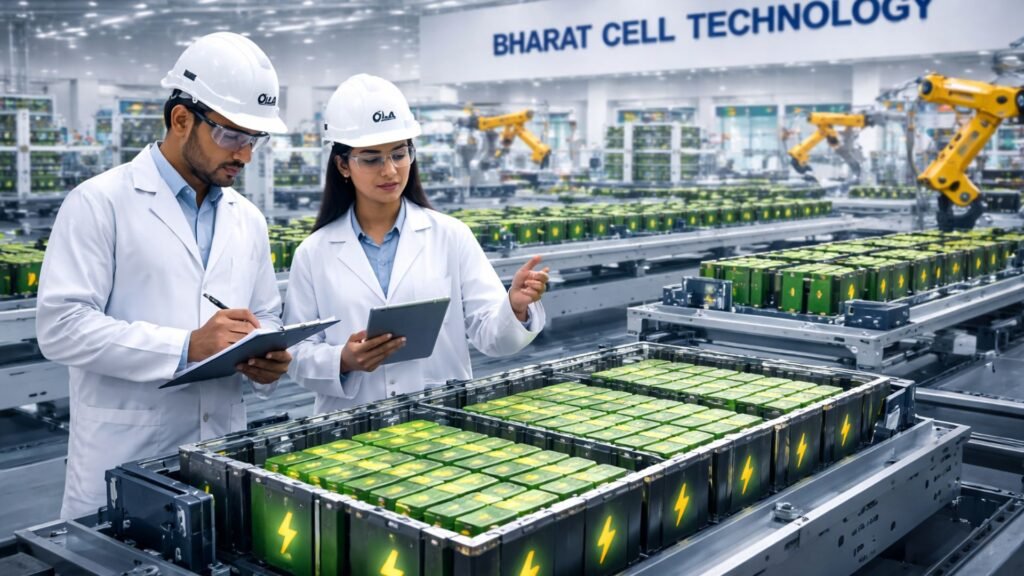
Ola currently has battery manufacturing capacity of 1.5 GWh. The plan is to scale this up to 6 GWh by the end of FY26.
To put that in perspective, 6 GWh can power roughly 100,000 electric scooters depending on battery sizes. This expansion is critical for meeting India’s growing EV demand and reducing reliance on imports from China and other countries.
Bharat Cell Technology: Ola’s Homegrown Innovation
While the stake sale handles the financial side, the technology side rests on something called the 4680 Bharat Cell.
What Exactly is the Bharat Cell?
The Bharat Cell is a cylindrical lithium-ion battery with specific dimensions:
- 46 mm diameter
- 80 mm height
The naming follows a standard format used globally – the first two numbers are diameter in millimeters, the next two are height. So 4680 means 46mm by 80mm.
This format is similar to advanced batteries being developed by global leaders, but Ola has tailored it specifically for Indian conditions – different temperatures, different riding patterns, different infrastructure realities.
Performance Advantages
Ola claims the Bharat Cell offers significant improvements over current battery technology:
- 5x higher energy density – More power stored in the same physical space
- 50% faster charging – Less time plugged in, more time on the road
For customers, these improvements translate directly to better experience. Higher energy density means longer range without making the battery heavier or bulkier. Faster charging means less anxiety about finding charging points on long trips.
Battery Chemistry and Technology
The Bharat Cell uses NMC chemistry – Nickel Manganese Cobalt – which is currently the dominant chemistry for EVs because it offers good energy density and performance.
But Ola isn’t stopping there. The technology is designed to support future variants including LFP (Lithium Iron Phosphate) and LMFP (Lithium Manganese Iron Phosphate) as those chemistries mature.
The cell also uses dry electrode technology, which is a manufacturing advancement that offers several benefits:
- More efficient production with fewer steps
- Lower cost compared to traditional wet processes
- Better environmental profile with less solvent use
Already in Use
This isn’t future technology that may or may not arrive. The Bharat Cell is already being deployed in Ola vehicles:
- Ola S1 Pro+ – Uses a 5.2 kWh battery pack
- Roadster X+ electric motorcycle – Uses a 9.1 kWh battery pack
These vehicles are offering ranges of up to 500 km depending on usage conditions. That’s competitive with anything available globally and positions Ola as a serious player in performance EVs.
Ola Shakti: Entering the Energy Storage Market
Here’s where Ola’s strategy gets really interesting. The company isn’t limiting itself to vehicle batteries. It’s expanding into home energy storage through a product called Ola Shakti.
What is Ola Shakti?
Ola Shakti is a Battery Energy Storage System (BESS) designed for homes. Think of it as a large backup battery that sits in your house, stores electricity when power is available, and provides backup when the grid goes down.
For Indian homes dealing with power cuts, voltage fluctuations, and rising electricity costs, this kind of product has real appeal.
Available Variants and Pricing
Ola has launched three variants at different price points:
| Capacity | Price | What It Can Power |
| 1.5 kWh | ₹29,999 (introductory) | Basic backup for lights, fans, TV |
| 5.2 kWh | ₹1,19,999 | Multiple rooms, appliances |
| 9.1 kWh | ₹1,59,999 | Up to 5 air conditioners simultaneously |
The top variant is particularly impressive – powering five ACs at once means whole-home backup even during peak summer when loads are highest.
Key Features
The Ola Shakti system isn’t just a basic battery. It comes with features that make it genuinely useful:
- 98% energy efficiency – Minimal loss when storing and retrieving power
- IP67-rated weatherproof design – Can be installed indoors or outdoors without worrying about dust or water
- AI-powered app – Real-time monitoring of power usage, battery status, and consumption patterns
The app integration means homeowners can track exactly how much power they’re using, when they’re using it, and how much they’re saving.
Launch Timeline
Deliveries of Ola Shakti began in January 2026. Initial customer feedback will be crucial in determining how fast this segment grows.
Why Energy Storage Matters
For Ola, entering the energy storage market makes strategic sense for several reasons:
- Diversification – Reduces dependence on vehicle sales for revenue
- Battery scale – More production volume means lower costs per unit
- Synergy with solar – As more homes install solar panels, battery storage becomes essential
- Brand expansion – Positions Ola as an energy company, not just a vehicle company
The global energy storage market is growing rapidly, and India is just at the beginning of this curve. Getting in early could pay off massively over the next decade.
Operational Challenges and Restructuring
Alongside these expansion plans, Ola is also dealing with internal challenges that can’t be ignored.
Workforce Reduction
In January 2026, the company announced layoffs affecting approximately 5% of its workforce – around 620 employees.
This is never easy news, but the company framed it as part of a broader effort to:
- Improve operational efficiency
- Move toward greater automation in manufacturing
- Reduce costs in a competitive market
For any company scaling up manufacturing, there comes a point where processes need to be optimized and headcount adjusted. Ola appears to be at that stage.
Revised Revenue Outlook
Ola has also adjusted its revenue expectations for FY26. The new forecast is ₹3,000–₹3,200 crore, down from the previous estimate of over ₹4,200 crore.
The revision reflects several realities:
- Rising competition – More EV players have entered the market, squeezing margins
- Service network challenges – Scaling service infrastructure to match sales has been difficult
- Slower growth – The EV market hasn’t expanded quite as fast as initially projected
None of this means Ola is in trouble. But it does mean the company is being realistic about what’s achievable in the current environment.
What This Means for India’s EV Industry
Ola’s moves don’t happen in isolation. They affect the entire EV ecosystem in India.
Boost to Local Manufacturing
By focusing on in-house battery production, Ola is directly supporting the “Make in India” initiative. Every battery cell made locally is one less cell imported, which improves India’s trade balance and builds domestic capability.
The supply chain that develops around Ola’s battery plant – raw material suppliers, equipment makers, maintenance services – will create jobs and capabilities that benefit the entire industry.
Growth of Energy Storage Market
Products like Ola Shakti signal that the energy storage market is becoming real in India. When a major player enters with serious products at competitive prices, it validates the market for other players.
This could lead to:
- More options for consumers
- Falling prices through competition
- Integration with solar power systems
- Growth of decentralized energy infrastructure
Homes that generate their own solar power and store it in batteries become less dependent on the grid. Over time, this could transform how India thinks about electricity.
Increased Competition
Ola’s aggressive expansion will push competitors to move faster. Other EV makers will need to:
- Accelerate their own battery development
- Improve technology to match Ola’s claims
- Expand service networks to compete on customer experience
Competition benefits consumers. Better products, lower prices, more choices – all of this follows from companies fighting for market share.
Key Takeaways
Let’s summarize what Ola Electric is doing right now:
- ₹2,000 crore stake sale planned in Ola Cell Technologies to fund battery expansion
- Bharat Cell technology aims to replace imported cells with homegrown innovation
- Energy storage segment launched through Ola Shakti with three variants priced from ₹29,999
- Production capacity to expand from 1.5 GWh to 6 GWh by FY26
- Workforce reduction of 5% as part of efficiency drive
- Revenue forecast revised to ₹3,000–₹3,200 crore for FY26
What to Watch Going Forward
The success of Ola’s strategy will depend on execution. Here’s what to keep an eye on.
Battery Production Scale-Up
Going from 1.5 GWh to 6 GWh is a big jump. Manufacturing at scale is hard. Quality control, yield rates, supply chain stability – all of these will determine whether Ola hits its targets.
Market Response to Ola Shakti
Will Indian homes buy battery storage systems at these price points? The 1.5 kWh variant at ₹29,999 is positioned as an entry point. If that sells well, the higher variants may follow. If not, Ola may need to rethink pricing or marketing.
Competitive Response
How will other EV makers react? Will Tata Motors accelerate its battery plans? Will new players enter the energy storage space? Ola’s moves will trigger responses, and those responses will shape the market.
Financial Performance
The ₹2,000 crore stake sale will help the balance sheet, but ultimately Ola needs to generate profits from operations. The next few quarters will show whether the restructuring is working.
Frequently Asked Questions About Ola Electric Battery Strategy
Q: What is Ola Cell Technologies?
A: Ola Cell Technologies is the subsidiary of Ola Electric focused on battery manufacturing and innovation. It develops and produces the Bharat Cell and other battery products.
Q: How much is Ola raising through the stake sale?
A: The company plans to raise up to ₹2,000 crore by selling a minority stake in Ola Cell Technologies.
Q: Who is handling the stake sale process?
A: Avendus Capital and Motilal Oswal are managing the process of identifying investors and structuring the deal.
Q: What is the Bharat Cell?
A: The Bharat Cell is Ola’s indigenous 4680 cylindrical lithium-ion battery with 5x higher energy density and 50% faster charging compared to conventional cells.
Q: Which Ola vehicles use the Bharat Cell?
A: The Ola S1 Pro+ (5.2 kWh battery) and Roadster X+ electric motorcycle (9.1 kWh battery) currently use Bharat Cell technology.
Q: What is Ola Shakti?
A: Ola Shakti is a Battery Energy Storage System (BESS) for homes, allowing users to store electricity and use it during outages.
Q: How much does Ola Shakti cost?
A: The three variants are priced at ₹29,999 (1.5 kWh), ₹1,19,999 (5.2 kWh), and ₹1,59,999 (9.1 kWh).
Q: When did Ola Shakti deliveries begin?
A: Deliveries started in January 2026.
Q: Why is Ola laying off employees?
A: The company announced a 5% workforce reduction in January 2026 as part of efforts to improve efficiency, move toward automation, and reduce operational costs.
Q: What is Ola’s revised revenue forecast for FY26?
A: Ola now expects revenue of ₹3,000–₹3,200 crore for FY26, down from the previous estimate of over ₹4,200 crore.
Q: How much battery capacity does Ola plan to have by FY26?
A: The company aims to expand production capacity from 1.5 GWh to 6 GWh by the end of FY26.
Q: What chemistry does the Bharat Cell use?
A: The Bharat Cell currently uses NMC (Nickel Manganese Cobalt) chemistry but is designed to support LFP and LMFP variants in the future.
The Bottom Line
Ola Electric is at a critical juncture. The ₹2,000 crore stake sale, the Bharat Cell technology, and the entry into energy storage all point to a company thinking long-term. These aren’t moves for quick profits – they’re investments in building capabilities that will matter for years.
The challenges are real. The stock has dropped, revenue forecasts have been revised, and competition is intensifying. But the direction is clear. Ola wants to control its own battery supply, expand into adjacent markets, and build a business that can survive and thrive beyond the current EV boom.
Whether they succeed depends on execution. Can they scale battery production without quality issues? Will homes buy energy storage systems? Can they manage costs while investing in new technology?
The answers will unfold over the next couple of years. For now, Ola has laid out a clear strategy. The rest is up to the market.