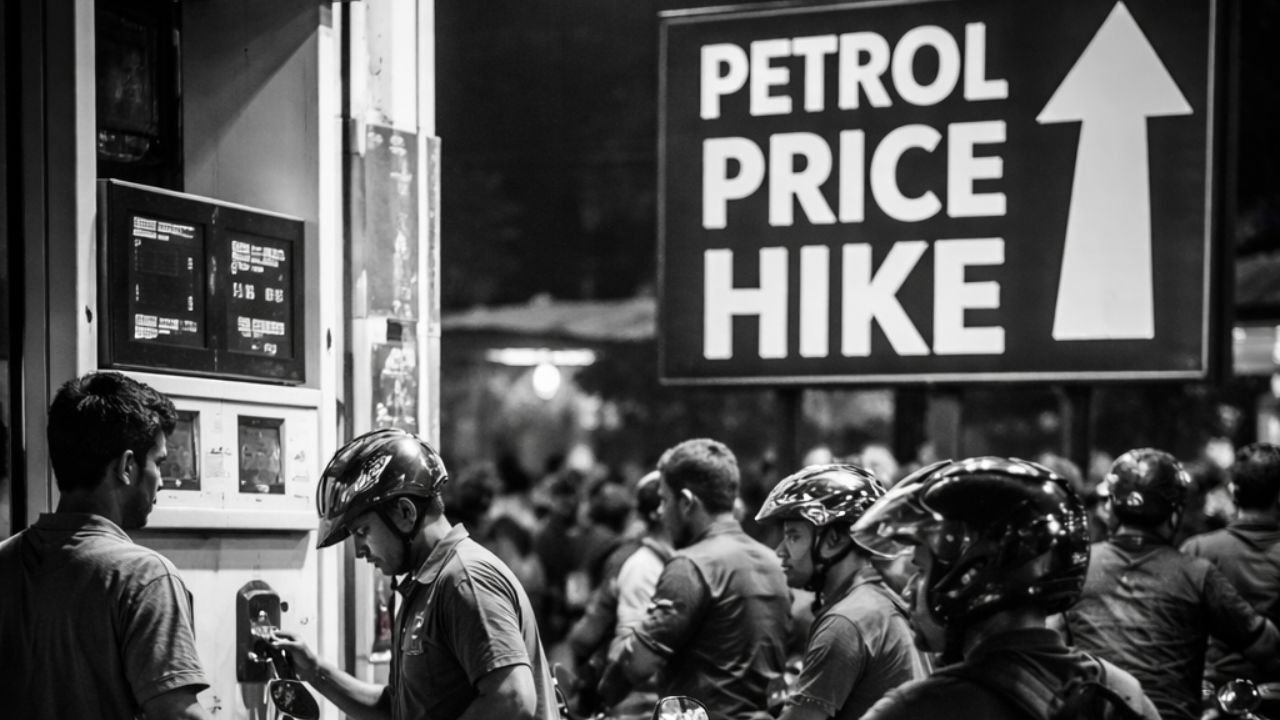
If you have filled fuel recently, you may have noticed something unusual. Petrol and diesel prices are no longer the same at all petrol pumps. Private fuel stations are charging ₹3 to ₹5 more than government outlets. Here is why this is happening and what it means for you.
For a long time, fuel prices in India were mostly uniform across all stations in a city. But that has changed. Now, where you choose to fill your tank matters as much as which city you are in.
Let me explain the current situation in simple words.
Current Situation: Two Different Price Trends
Government Fuel Prices Remain Stable
State-run oil companies like Indian Oil, Bharat Petroleum, and Hindustan Petroleum have kept petrol and diesel prices unchanged in most major cities. These companies follow a controlled pricing approach. They try to avoid sudden fluctuations and keep prices stable for consumers.
Private Fuel Prices Are Rising
Private fuel retailers like Nayara Energy have increased their prices recently.
- Petrol prices went up by around ₹5 per litre
- Diesel prices increased by around ₹3 per litre
As a result, private petrol pumps are now ₹3 to ₹5 more expensive than government outlets in many areas.
Latest Fuel Prices in Major Cities (Public Sector)
Here is what you are paying at government-operated fuel stations in major cities.
Metro Cities
| City | Petrol (₹/litre) | Diesel (₹/litre) | CNG (₹/kg) |
| New Delhi | 94.77 | 87.67 | 77.09 |
| Mumbai | 103.54 | 92.15 | 80.50 |
| Kolkata | 105.41 | 92.02 | 93.50 |
| Chennai | 101.06 | 92.39 | 91.50 |
| Bengaluru | 102.92 | 90.99 | 90.10 |
| Hyderabad | 107.50 | 95.70 | 96.00 |
Gujarat Cities
| City | Petrol (₹/litre) | Diesel (₹/litre) | CNG (₹/kg) |
| Surat | 94.32 | 90.01 | 82.45 |
| Vadodara | 94.15 | 89.82 | 81.35 |
| Ahmedabad | 94.49 | 90.25 | 82.38 |
These prices have remained largely stable at government-operated fuel stations.
Why Private Fuel Prices Are Increasing Faster
There are a few reasons why private companies are charging more right now.
1. Faster Cost Adjustment
Private companies follow a market-driven approach. When global crude oil prices go up, they increase their prices quickly. When prices go down, they reduce them fast.
Government companies do the opposite. They delay price changes and absorb short-term fluctuations to keep prices stable for consumers.
2. Impact of Global Oil Prices
Global crude oil prices have been moving up and down due to geopolitical factors.
- Crude oil recently touched around $119 per barrel
- It is now stabilizing near $100 per barrel
Private companies react immediately to these changes. Public companies take a more gradual approach.
3. Profit and Margin Pressure
Private fuel retailers do not have the same policy flexibility as public sector companies. They need to maintain profitability to stay in business. So they increase prices faster and avoid long-term financial losses.
Public vs Private Pricing: What It Means for Consumers
Immediate Impact
- Private pumps are more expensive by ₹3 to ₹5 per litre
- Consumers are choosing government outlets whenever possible
- People are now comparing prices before filling fuel
Long-Term Impact
- Government companies may increase prices later if crude stays high
- The price gap may reduce over time
- Market competition may increase
Government’s Position on Fuel Supply
The government has assured that there is no shortage of fuel in India. The country has around 60 days of oil buffer stock, and refining capacity remains strong.
Consumers are advised not to panic and to rely on stable supply systems.

CNG and LPG Prices: A Different Trend
CNG Prices
CNG prices have remained relatively stable across cities.
- Delhi: ₹77.09 per kg
- Vadodara: ₹81.35 per kg
CNG is generally less volatile compared to petrol and diesel.
LPG Prices
LPG prices saw an increase earlier in March 2026. A domestic cylinder is now around ₹913 in Delhi. This shows that different fuel types follow different pricing cycles.
A Bigger Trend: Changing Fuel Market Structure
The current situation highlights an important shift in India’s fuel market.
Two pricing models are emerging:
- Public sector: Controlled and stable pricing
- Private sector: Market-driven and dynamic pricing
This creates temporary price differences but also introduces competition. Over time, this could benefit consumers.
What Should Consumers Do
Short-Term Strategy
- Prefer government fuel stations for lower prices
- Compare fuel prices before refueling
- Check prices on apps or ask at the pump
Long-Term Awareness
- Monitor crude oil trends
- Be prepared for price changes across all fuel stations
- Consider fuel-efficient vehicles if you drive frequently
Future Outlook
If Crude Prices Increase
Both private and public companies may raise prices. The price difference may reduce as government companies also adjust upward.
If Crude Prices Decrease
Private companies may reduce prices faster. Government companies may follow gradually.
Final Analysis
India’s fuel pricing system is evolving. The difference between public and private fuel prices reflects a balance between market-driven pricing and controlled stability.
Private companies respond quickly to global changes. They pass on costs to consumers faster. Government companies aim to protect consumers from sudden price shocks by absorbing some fluctuations.
Both approaches have their place. One offers stability. The other offers quick adjustments. For consumers, knowing the difference can save money.
Conclusion
As of March 2026, fuel prices in India are no longer uniform across all outlets. Private players are adjusting prices faster, while government companies are maintaining stability.
If you want to save money right now, choosing a government fuel station makes sense. But keep in mind that fuel prices can change. What is true today may not be true next week.
The key takeaway is simple – fuel prices now depend not only on your city but also on the type of fuel station you choose. A little awareness can help you spend less at the pump.
Frequently Asked Questions
Q: Why are private petrol pumps charging more than government outlets?
A: Private companies follow a market-driven approach and adjust prices quickly based on global crude oil changes. Government companies delay price changes to maintain stability.
Q: How much more are private pumps charging?
A: Private pumps are currently charging ₹3 to ₹5 more per litre compared to government outlets.
Q: Which private companies have increased fuel prices?
A: Nayara Energy has recently increased petrol and diesel prices. Other private retailers may follow.
Q: What are the current petrol and diesel prices in Delhi?
A: In Delhi, petrol is ₹94.77 per litre and diesel is ₹87.67 per litre at government outlets.
Q: Is there a fuel shortage in India?
A: No. The government has confirmed there is no shortage. India has around 60 days of oil buffer stock.
Q: Will government companies also increase prices soon?
A: If crude oil prices remain high, government companies may increase prices gradually. But they are currently absorbing short-term fluctuations.
Q: Are CNG prices also higher at private pumps?
A: CNG prices have remained relatively stable. The main difference is seen in petrol and diesel.
Q: How can I find the lowest fuel price near me?
A: You can use apps like IndianOil ONE, BPCL, or HP Pay to check prices at nearby stations. Some third-party apps also show price comparisons.
Q: Does this price difference exist in all cities?
A: The difference is visible in most major cities where both government and private pumps operate. In smaller towns, private presence may be limited.
Q: Should I avoid private pumps entirely?
A: Not necessarily. If you are looking for the lowest price, government outlets are cheaper right now. But private pumps may offer other benefits like loyalty programs or better services.