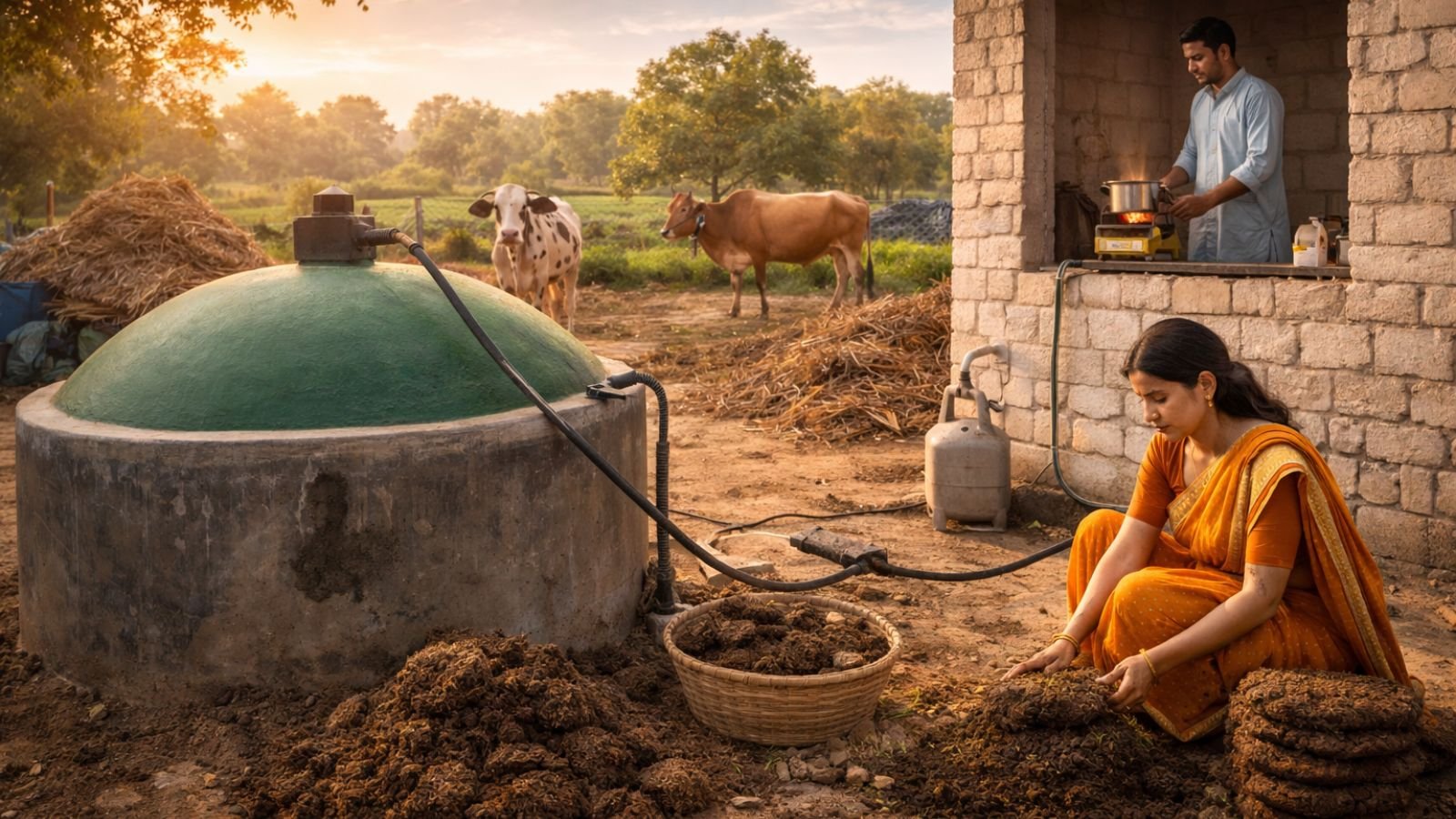
Cow dung based biogas is emerging as one of the most practical and sustainable energy solutions in India. It converts agricultural waste into clean fuel, electricity, and organic fertilizer – making it both environmentally and economically powerful.
The Cow Dung Biogas India 2026 landscape is evolving rapidly as more households and farms adopt this renewable energy source.
What is Biogas and How It Works
Biogas is produced through anaerobic digestion, where bacteria break down organic matter (like cow dung) in the absence of oxygen.
Output from One System
- Methane-rich gas for cooking or electricity
- Bio-slurry (liquid fertilizer)
- Reduced waste and emissions
Key Benefits of Cow Dung Biogas
Cost Savings
A small household plant (with 2 or more cows) can cover daily cooking needs. Annual savings range from ₹60,000 to ₹70,000. It reduces dependency on LPG and chemical fertilizers.
Superior Organic Fertilizer
The byproduct is bio-slurry, which is rich in nutrients and more effective than raw manure. It improves soil fertility and crop yield.
Cleaner Environment
Biogas burns cleaner than wood or dung cakes, reduces indoor air pollution, and captures methane emissions (a major greenhouse gas).
Renewable and Reliable
Unlike solar or wind, biogas works 24/7. The gas is easily storable, making it ideal for rural and semi-urban households.
Comparison: Traditional Fuel vs Biogas
- Heat Efficiency: Dried dung cakes offer low smoky burn, while biogas provides high clean blue flame
- Health Impact: Dried dung cakes cause high smoke exposure, while biogas creates minimal smoke
- Byproduct: Dried dung cakes produce ash with limited use, while biogas produces nutrient-rich bio-slurry
- Environment: Dried dung cakes have high emissions, while biogas has approximately 52% lower carbon footprint
Practical Setup Requirements
Feedstock Requirement
20 to 25 kg fresh dung produces 1 m³ of biogas, which is equivalent to approximately 450g of LPG.
Water Ratio
Mix dung and water in a 1:1 ratio to create slurry for digestion.
Ideal Temperature
Best performance occurs at 35°C to 38°C, which is suitable for most Indian climates.
Available Solutions in India
Household Systems
HomeBiogas offers ready-to-install compact digesters ideal for homes and small farms.
Organic Fertilizer Products
Greenearth Plus Fermented Organic Manure is an alternative if full setup is not feasible.
Commercial Plants
Perfect Bio-Waste & Power Management provides large-scale systems for dairy farms, generating both electricity and gas.
Is It Practical for Urban Users?
Suitable for:
- Rural households
- Dairy farms
- Villages with livestock
Challenging for:
- Apartments or cities without cattle
- Limited space or waste supply
However, community biogas plants and government schemes are expanding urban possibilities.
Final Verdict
Cow dung biogas is not just an alternative – it is a highly practical, low-cost, and sustainable energy solution for India, especially in rural areas.
With rising LPG prices and increasing focus on sustainability, biogas can play a major role in India’s energy future.
Frequently Asked Questions
Q1. How much cow dung is needed to produce biogas for daily cooking?
A1. A small household plant with 2 or more cows can cover daily cooking needs. Approximately 20 to 25 kg of fresh dung produces 1 m³ of biogas, equivalent to about 450g of LPG.
Q2. What are the annual savings from using a cow dung biogas plant?
A2. Annual savings range from ₹60,000 to ₹70,000 by reducing dependency on LPG and chemical fertilizers.
Q3. What is the byproduct of biogas production and how is it useful?
A3. The byproduct is bio-slurry, a nutrient-rich liquid fertilizer that is more effective than raw manure and improves soil fertility and crop yield.
Q4. Is cow dung biogas practical for urban households?
A4. Biogas is most practical for rural households, dairy farms, and villages with livestock. It is challenging for apartments or cities without cattle, though community biogas plants are expanding urban possibilities.
Q5. How does biogas compare to dried dung cakes in terms of environmental impact?
A5. Biogas has approximately 52% lower carbon footprint compared to dried dung cakes. It burns cleaner with minimal smoke and captures methane emissions, a major greenhouse gas.