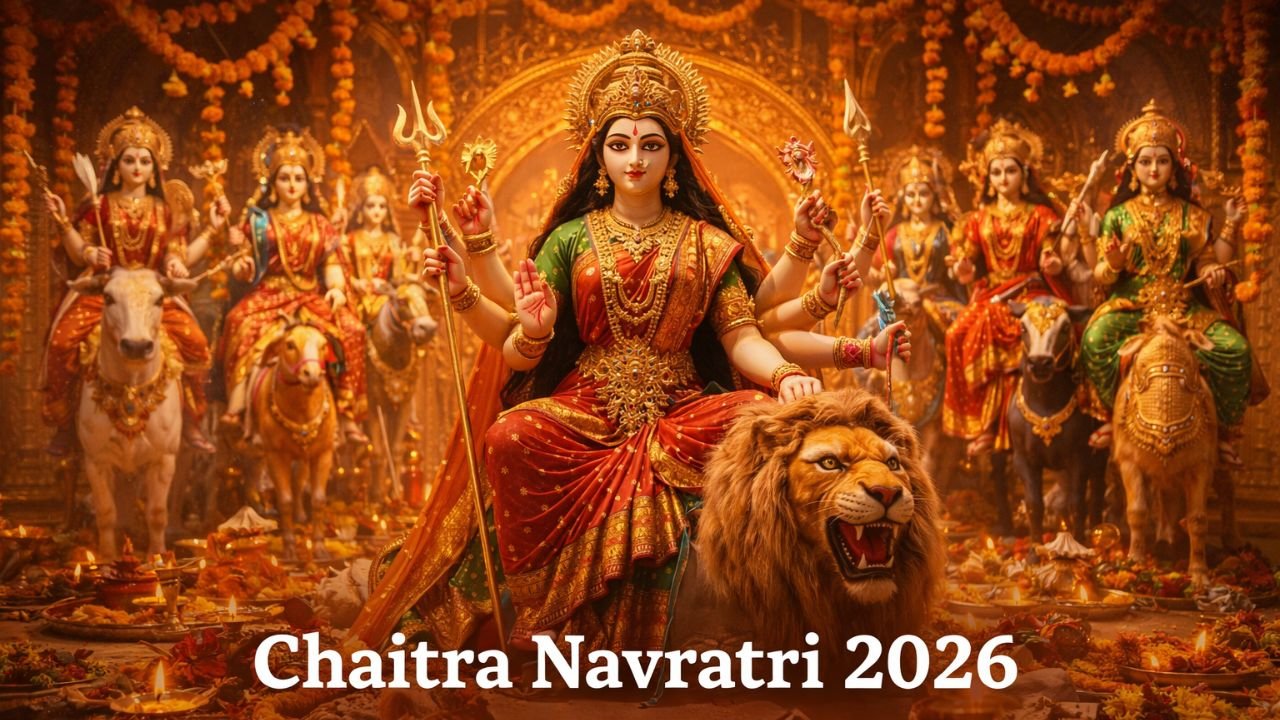
Chaitra Navratri 2026 is one of the most important Hindu festivals dedicated to Goddess Durga. It starts on March 19 and ends on March 27 with Ram Navami. Here is everything you need to know about dates, colors, rituals, and fasting rules in simple words.
Navratri means nine nights. During these nine nights, devotees worship nine different forms of Goddess Durga. This festival also marks the beginning of the Hindu New Year, Vikram Samvat 2083. So it is a time of new beginnings, faith, and devotion.
Let me explain everything step by step so you can understand easily.
Chaitra Navratri 2026 Dates and Muhurat
First, let us get the dates right. Navratri starts on Thursday, March 19, 2026, and ends on Friday, March 27, 2026. The last day is Ram Navami, which celebrates the birth of Lord Ram.
Ghatasthapana Muhurat (Kalash Sthapana)
Ghatasthapana is the most important ritual of the first day. It is when you establish the Kalash and invite the Goddess into your home. Doing this at the right time is considered very important.
The best time for Ghatasthapana is in the morning from 06:52 AM to 07:43 AM. If you cannot do it in the morning, there is an alternative time called Abhijit Muhurat from 12:05 PM to 12:53 PM.
Try to perform this ritual within these times for the best results.
Significance of Chaitra Navratri
Chaitra Navratri is not just about fasting and worship. It has deeper meaning.
- It represents the victory of good over evil
- It is a time for spiritual awakening and cleansing
- It marks the start of the Hindu New Year (Vikram Samvat 2083)
For nine days, devotees focus on prayer, self-discipline, and connecting with the divine energy of Goddess Durga.
9 Days of Navratri: Colors and Goddess Guide
Each day of Navratri is dedicated to a different form of Goddess Durga. Each form has its own color and significance.
Day 1 – March 19 (Yellow) – Maa Shailputri
This is the first day. The color is yellow. Maa Shailputri is the daughter of the mountains. She represents strength and purity. On this day, you perform Ghatasthapana and begin your nine-day journey.
Day 2 – March 20 (Green) – Maa Brahmacharini
The color is green. Maa Brahmacharini represents devotion and penance. She is the form of the Goddess who performed hard penance to achieve her goals. This day teaches us dedication.
Day 3 – March 21 (Grey) – Maa Chandraghanta
The color is grey. Maa Chandraghanta is the symbol of courage and grace. She wears a half-moon on her forehead and represents bravery in the face of difficulties.
Day 4 – March 22 (Orange) – Maa Kushmanda
The color is orange. Maa Kushmanda is believed to have created the universe with her smile. She represents energy and creation. Worship her for strength and vitality.
Day 5 – March 23 (White) – Maa Skandamata
The color is white. Maa Skandamata is the mother of Lord Kartikeya. She symbolizes motherhood, peace, and the love between a mother and child.
Day 6 – March 24 (Red) – Maa Katyayani
The color is red. Maa Katyayani is the warrior form of the Goddess. She represents power and bravery. Many unmarried women worship her to get a good husband.
Day 7 – March 25 (Royal Blue) – Maa Kalaratri
The color is royal blue. Maa Kalaratri is the fierce form who removes fear and negativity. She protects devotees from evil forces and brings peace.
Day 8 – March 26 (Pink) – Maa Mahagauri
The color is pink. This day is very important. Ashtami Sandhi Puja is performed on this day. Maa Mahagauri represents purity, peace, and forgiveness.
Day 9 – March 27 (Purple or Green) – Maa Siddhidatri
The color is purple or green. This is the last day of Navratri, also called Ram Navami. Maa Siddhidatri gives knowledge and spiritual powers. Kanya Pujan is performed on this day.
Important Rituals to Follow During Navratri
If you are observing Navratri this year, here are the main rituals you need to know.
Ghatasthapana (Day 1)
This is the starting ritual. Take a clay pot and fill it with water. Place a coconut wrapped in red cloth on top. In a separate container, sow barley seeds in soil. This is called Kalash Sthapana. It invites the Goddess into your home.
Akhand Jyoti
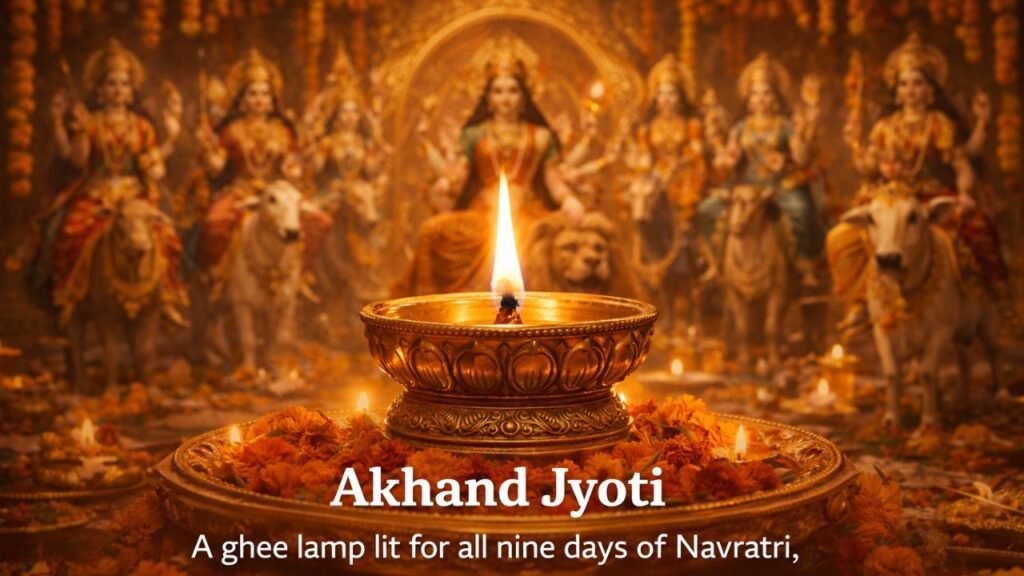
Light a ghee lamp that should burn continuously for all nine days. This lamp represents divine energy. If you cannot keep it burning non-stop due to safety reasons, lighting it morning and evening is also acceptable.
Daily Puja
Every day, offer flowers, fruits, and prasad to the Goddess. Chant Durga Chalisa or Durga Saptashati if you can. Even simple prayers with devotion are enough.
Kanya Pujan (Day 8 or 9)
On the eighth or ninth day, worship nine young girls as the nine forms of Goddess Durga. Wash their feet, offer them food, and give them gifts or dakshina. This is considered very auspicious and brings blessings to your family.
Vikram Samvat 2083: Astrology Insights
This Navratri also marks the start of Vikram Samvat 2083, the Hindu New Year.
The year 2083 is named “Raudra”. It has 13 months because there is an extra month called Adhik Jyeshtha. This happens once every few years in the Hindu calendar.
The planetary rulers for this year are Jupiter as King and Mars as Minister. Predictions suggest growth in spirituality and economy, but also possibility of rapid changes and occasional conflicts.
Navratri Fasting Rules (Sattvik Diet)
Fasting during Navratri is not just about skipping food. It is about eating pure, light food that keeps your mind calm and body healthy.
What You Can Eat
- Rock salt (Sendha Namak) – regular salt is not allowed
- All fruits and milk products
- Buckwheat flour (Kuttu) and water chestnut flour (Singhara)
- Sabudana (sago) for khichdi or vada
- Potatoes, sweet potatoes, pumpkin, and arbi
- Ghee, curd, and buttermilk
What to Avoid
- Onion and garlic – strictly not allowed
- Regular table salt
- Wheat, rice, and any lentils or pulses
- Meat, eggs, and alcohol
- Packaged and processed foods
Popular Navratri Fasting Recipes
If you are fasting and wondering what to cook, here are some popular options.
Sabudana Dishes
- Sabudana Khichdi – soft sabudana cooked with peanuts and potato
- Sabudana Thalipeeth – a flatbread made from sabudana flour
Kuttu and Singhara Recipes
- Kuttu Paratha – flatbread made with buckwheat flour and potato
- Singhara flour roti – simple and filling
Desserts
- Makhana Kheer – foxnuts cooked in milk with sugar and cardamom
- Lauki Halwa – bottle gourd halwa made with milk and ghee
These dishes are filling, healthy, and follow the fasting rules.
Health and Discipline During Navratri
Navratri is not only about rituals. It is also about discipline.
Keep your home and puja space clean. Practice calmness and avoid negative thoughts. Wear the colors associated with each day if you can. These small acts help you stay focused and connected to the spiritual purpose of the festival.
Why Navratri Matters Today
In today’s busy world, Navratri gives us a reason to pause. It is a time for mental detox. It helps us practice self-discipline. It brings families together for prayers and meals.
For nine days, we step away from our regular habits and focus on something higher. This is good for both mind and body.
Conclusion
Chaitra Navratri 2026 begins on March 19 and ends on March 27. The most important ritual, Ghatasthapana, should be done in the morning between 06:52 AM and 07:43 AM.
Each of the nine days has its own color and goddess. Yellow, green, grey, orange, white, red, royal blue, pink, and purple. Wear these colors if you can and worship the form of the Goddess for that day.
Follow the fasting rules – eat sattvik food, avoid onion and garlic, use rock salt. Prepare simple meals like sabudana khichdi or kuttu paratha.
This Navratri also starts the Hindu New Year, Vikram Samvat 2083. It is a fresh beginning filled with hope and positivity.
May Goddess Durga bless you and your family with health, happiness, and prosperity.
Frequently Asked Questions
Q: When does Chaitra Navratri 2026 start and end?
A: Chaitra Navratri 2026 starts on Thursday, March 19, 2026, and ends on Friday, March 27, 2026.
Q: What is the best time for Ghatasthapana?
A: The best time is morning from 06:52 AM to 07:43 AM. The alternative time is Abhijit Muhurat from 12:05 PM to 12:53 PM.
Q: What are the 9 colors of Chaitra Navratri 2026?
A: The nine colors are Yellow, Green, Grey, Orange, White, Red, Royal Blue, Pink, and Purple.
Q: What is Ram Navami?
A: Ram Navami is the last day of Navratri, celebrated as the birth of Lord Ram. It falls on March 27, 2026.
Q: What foods are allowed during Navratri fasting?
A: Allowed foods include rock salt, fruits, milk, kuttu, singhara, sabudana, potatoes, and ghee. Onion, garlic, regular salt, wheat, and rice are not allowed.
Q: What is Kanya Pujan?
A: Kanya Pujan is the ritual of worshiping nine young girls as forms of Goddess Durga. It is performed on Ashtami or Navami.
Q: What is Vikram Samvat 2083?
A: Vikram Samvat 2083 is the Hindu New Year that begins with Chaitra Navratri. It has 13 months and is named “Raudra”.
Q: Can I eat onion and garlic during Navratri?
A: No, onion and garlic are strictly avoided during Navratri fasting.
Q: What is Akhand Jyoti?
A: Akhand Jyoti is a ghee lamp lit for all nine days of Navratri, symbolizing continuous devotion and divine energy.
Q: What is the significance of Chaitra Navratri?
A: Chaitra Navratri marks the victory of good over evil, spiritual awakening, and the beginning of the Hindu New Year.