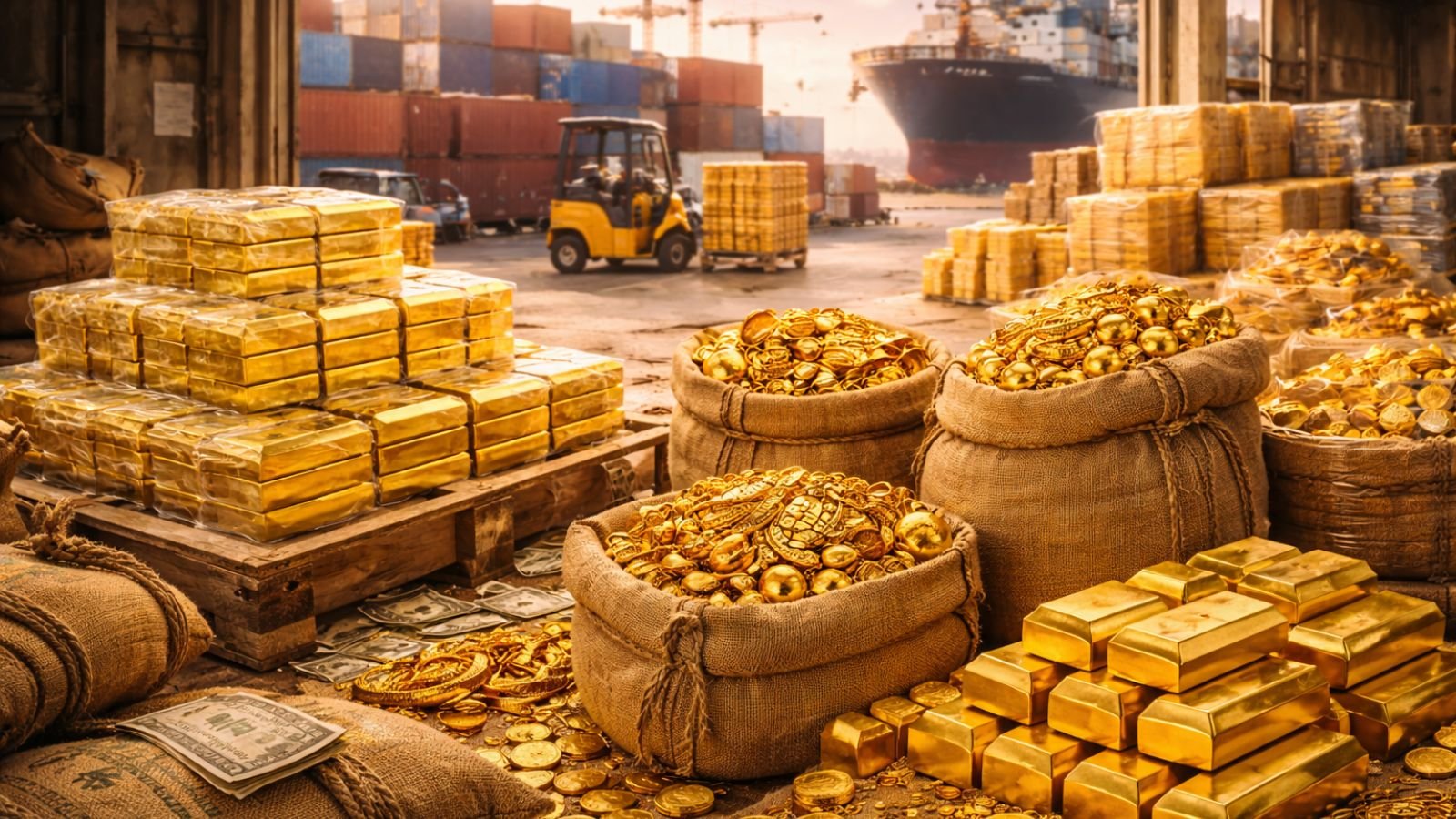
India’s gold imports have surged sharply in the April–February 2025–26 period, reaching a record $69 billion, marking a 28.73% increase compared to the previous year. This spike has significantly widened the country’s trade deficit and raised concerns about currency pressure and economic stability.
Gold, traditionally seen as a safe-haven asset in India, is now playing a major role in shaping macroeconomic trends. The India Gold Import Surge 2025–26 has become a critical factor in the country’s economic outlook.
Critical Trade Data (Apr–Feb 2025–26)
- Gold Import Value: $69 billion
- Previous Year (FY25): $53.52 billion
- Trade Deficit Impact: Expanded to $310.60 billion (approximately 18.6% increase year-on-year)
- Import Share: Gold now contributes over 5% of total imports
- Silver Imports: Jumped 142.87% to $11.43 billion due to industrial demand
This indicates that precious metals are becoming a significant component of India’s import bill.
Why Gold Imports Are Rising
1. Record Global Prices
Gold prices have surged globally. In Delhi, 24K gold is around ₹1,51,500 per 10 grams.
2. Safe-Haven Demand
Investors are shifting to gold due to global economic uncertainty and geopolitical tensions in the Middle East. Gold ETFs have seen record inflows.
3. Strong Supply Channels
Major suppliers include Switzerland (40%), United Arab Emirates (16%), and South Africa (10%).
Government and RBI Response
Import Restrictions
The Directorate General of Foreign Trade (DGFT) moved gold, silver, and platinum imports from “Free” to “Restricted” category. The aim is to prevent misuse of Free Trade Agreements.
Gold Repatriation
The Reserve Bank of India (RBI) shifted 64 tonnes of gold to domestic vaults. The purpose is to strengthen financial security and reduce storage costs.
Rising Reserve Share
Gold now makes up 17.2% of India’s forex reserves. This is the highest level on record.
Current Gold Prices in India (April 2026)
- Chennai: 24K – ₹15,218 | 22K – ₹13,950
- Delhi: 24K – ₹15,108 | 22K – ₹13,850
- Mumbai: 24K – ₹15,093 | 22K – ₹13,835
- Bengaluru: 24K – ₹15,093 | 22K – ₹13,835
- Hyderabad: 24K – ₹15,093 | 22K – ₹13,835
- Ahmedabad: 24K – ₹15,098 | 22K – ₹13,840
- Kolkata: 24K – ₹15,093 | 22K – ₹13,835
Prices vary slightly due to local taxes and logistics.
Economic Implications
Currency Pressure
Increased gold imports mean higher dollar outflow. This puts pressure on the Indian Rupee, with risks of depreciation beyond ₹95 per USD.
Current Account Deficit (CAD)
CAD projected to reach 2.8% of GDP. Higher imports without matching exports worsen external balance.
Inflation Risks
Rising gold prices can increase jewelry costs and impact consumer spending patterns.
Key Market Drivers
- Safe-Haven Buying: Continued uncertainty globally is sustaining demand
- Policy Constraints: DGFT restrictions may slow imports slightly but not eliminate demand
- Tax Structure: Gold purchases include 3% GST on gold value and 5% GST on making charges
What This Means for India
Gold demand remains culturally and financially strong. However, excessive imports widen the trade deficit India, pressure currency, and increase economic vulnerability.
The government may need to balance demand through policy controls while encouraging alternative investments like bonds and financial instruments.
Conclusion
India’s record gold import record India surge in 2025–26 reflects both global uncertainty and domestic demand strength. While gold continues to be a trusted asset, its growing share in imports is creating macroeconomic challenges.
Future policy focus will likely aim to reduce dependency on gold imports, promote financial investments, and stabilize the trade deficit and currency.
Frequently Asked Questions
Q1. How much did India’s gold imports increase in 2025–26?
A1. Gold imports reached a record $69 billion in the April–February 2025–26 period, a 28.73% increase from $53.52 billion in the previous year.
Q2. What is the current gold price in Delhi (April 2026)?
A2. In Delhi, 24K gold is approximately ₹15,108 per gram and 22K gold is approximately ₹13,850 per gram.
Q3. What steps has the government taken to control gold imports?
A3. The DGFT moved gold imports from “Free” to “Restricted” category to prevent misuse of Free Trade Agreements. The RBI also shifted 64 tonnes of gold to domestic vaults.
Q4. How does the gold import surge affect India’s economy?
A4. Higher gold imports widen the trade deficit (reached $310.60 billion), pressure the Indian Rupee, and increase the Current Account Deficit to an estimated 2.8% of GDP.
Q5. What is gold’s share in India’s foreign exchange reserves?
A5. Gold now makes up 17.2% of India’s forex reserves, which is the highest level on record.