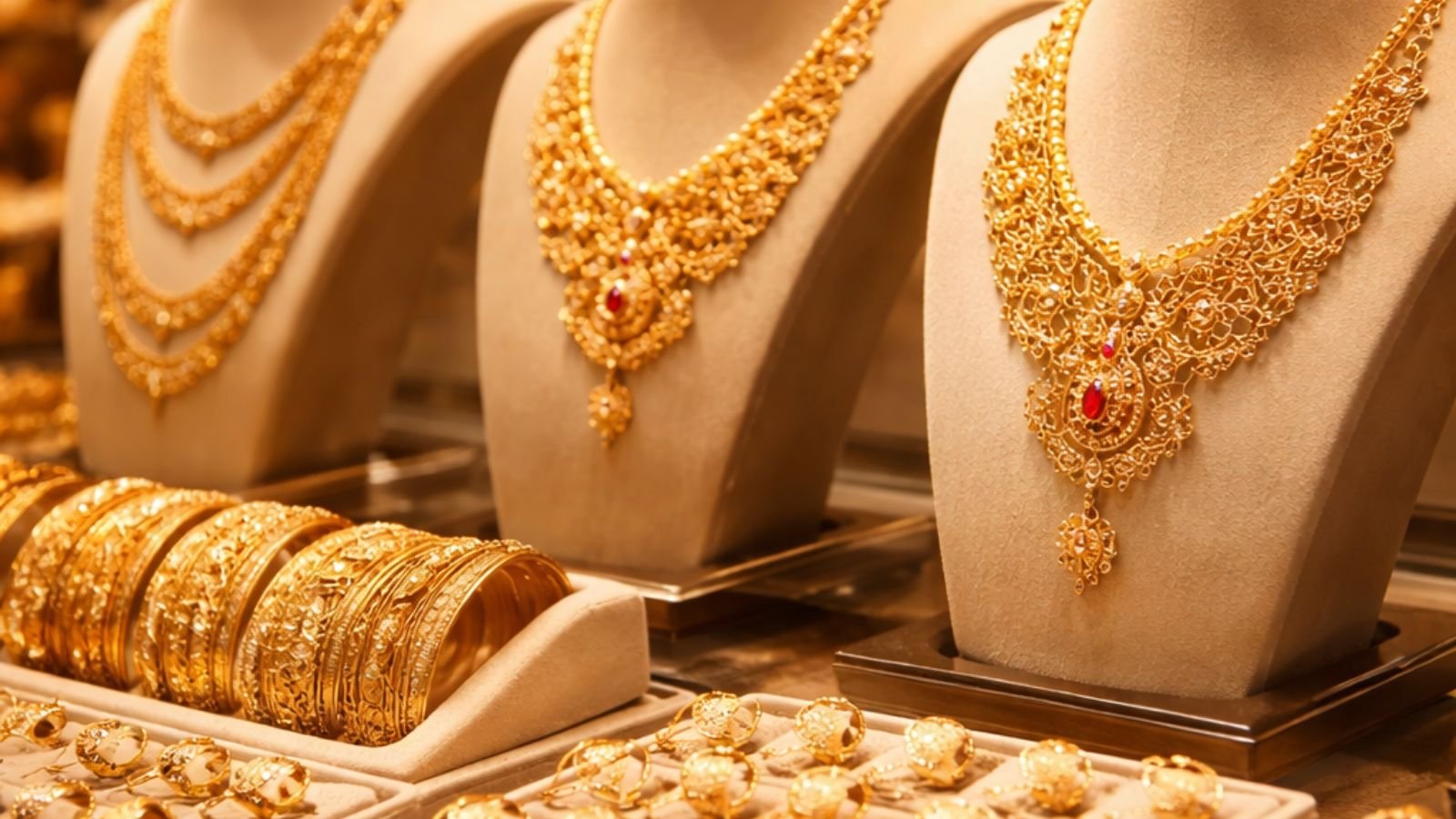
Gold prices in India for April 2026 are expected to move in a sideways to moderately bullish trend, with projections placing rates between ₹1.55 lakh and ₹1.75 lakh per 10 grams. The month has already started with noticeable volatility, reflecting global cues, domestic demand, and investor sentiment.
Early April price movements highlight this fluctuation – after a dip, gold rebounded to around ₹1,51,360 on April 3, indicating strong buying interest at lower levels. This Gold Price Forecast April 2026 provides a comprehensive outlook for investors and buyers.
Current Market Snapshot (April 1–3, 2026)
The first three days of April saw sharp swings in gold price India:
- April 1, 2026: ~₹1,49,510 per 10g
- April 2, 2026: ~₹1,46,608 (correction phase)
- April 3, 2026: ~₹1,51,360 (strong rebound)
Globally, gold prices hovered between $4,654 and $4,677 per ounce, showing relative stability despite short-term corrections.
Major institutions like Goldman Sachs and J.P. Morgan maintain a bullish outlook for 2026, with year-end targets nearing ₹1.8 lakh to ₹2 lakh per 10 grams.
Key Factors Driving Gold Prices Up
1. Wedding Season and Akshaya Tritiya Demand
India’s peak wedding season between April and June significantly boosts gold demand. Akshaya Tritiya gold demand on April 19, 2026, is traditionally one of the biggest gold-buying days, often leading to record sales.
2. Central Bank Buying
Global central banks, especially in emerging markets, continue accumulating gold reserves to diversify away from the US dollar. This sustained demand creates a strong price floor.
3. Geopolitical Uncertainty
Ongoing global tensions – particularly in the Middle East and Eastern Europe – enhance gold’s appeal as a safe-haven asset, supporting upward momentum.
Factors That May Pressure Prices Down
1. US Federal Reserve Policy
If the Federal Reserve maintains a hawkish stance with higher interest rates, gold could face short-term corrections due to reduced investor appeal.
2. Profit Booking
After a strong rally in late 2025 and early 2026, investors may sell holdings to lock in gains, causing temporary dips.
3. Strength of the US Dollar
A stronger dollar typically makes gold more expensive globally, potentially reducing international demand.
April 2026 Price Targets and Outlook
Monthly Range
Expected range: ₹1.55 lakh to ₹1.70 lakh per 10 grams
Futures Market
MCX gold futures recently traded near ₹1,63,594 per 10 grams, indicating bullish sentiment
Global Benchmark
Expected range: $4,600 to $5,000 per ounce
Key Drivers to Watch in April
- Akshaya Tritiya (April 19): Demand spike and retail buying surge
- Wedding Season: Sustained jewellery demand across India
- Central Bank Activity: Continued accumulation by countries like India and China
- US Interest Rate Signals: Any hint of rate cuts could push gold higher

City-Wise Gold Prices (April 3, 2026)
Approximate rates for 10 grams:
Mumbai
- 24K: ₹1,50,930
- 22K: ₹1,38,350
Delhi
- 24K: ₹1,51,080
- 22K: ₹1,38,500
Surat
- 24K: ₹1,50,980
- 22K: ₹1,38,400
Bangalore
- 24K: ₹1,50,930
- 22K: ₹1,38,350
Chennai
- 24K: ₹1,51,090
- 22K: ₹1,38,500
Ahmedabad
- 24K: ₹1,50,980
- 22K: ₹1,38,400
Note: Final jewellery prices include 3% GST and making charges (5% to 25%).
Gold ETF vs Physical Gold: What Should You Choose?
1. Cost and Efficiency
Gold ETFs: No GST or making charges; bought at market rate. Physical Gold: Includes GST and making charges.
2. Liquidity
Gold ETFs: Easily traded on exchanges like National Stock Exchange of India. Physical Gold: Requires resale via jewellers, often with deductions.
3. Storage and Safety
Gold ETFs: Held digitally in Demat accounts; no storage risk. Physical Gold: Requires lockers or safes.
4. Taxation (2026 Rules)
ETFs: Long-term capital gains after 12 months. Physical Gold: Long-term after 24 months. Tax Rate: ~12.5% LTCG.
Investment Strategy for April 2026
- Short-Term Buyers: Expect volatility; consider staggered buying (SIP-style approach)
- Festival Buyers: Akshaya Tritiya remains a strong cultural buying opportunity
- Long-Term Investors: Bullish outlook supported by global trends and institutional demand
- Portfolio Diversification: Allocate 5 to 15% of your portfolio to gold for risk hedging
Long-Term Outlook for 2026
Leading global institutions remain optimistic:
- Goldman Sachs: Target $5,400/oz (₹1.7–1.9 lakh)
- J.P. Morgan: Target $5,055/oz (₹1.8 lakh)
- UBS: Target ~$6,200/oz due to geopolitical risks
Conclusion
April 2026 is shaping up to be a volatile yet bullish month for gold in India. While short-term fluctuations are expected due to global factors and investor behavior, strong domestic demand – driven by weddings and festivals – along with central bank buying, is likely to support prices.
For investors and buyers alike, gold continues to remain a reliable asset for both cultural significance and financial security.
Frequently Asked Questions
Q1. What is the expected gold price range in April 2026?
A1. Gold prices in India are expected to trade between ₹1.55 lakh and ₹1.70 lakh per 10 grams during April 2026, with global prices ranging from $4,600 to $5,000 per ounce.
Q2. Why is Akshaya Tritiya important for gold buyers?
A2. Akshaya Tritiya, falling on April 19, 2026, is traditionally one of the biggest gold-buying days in India, often leading to record sales and significant retail demand.
Q3. What is the difference between Gold ETFs and physical gold?
A3. Gold ETFs have no GST or making charges, are traded on exchanges, and are held digitally. Physical gold includes GST and making charges, requires storage, and has different taxation rules (24 months for LTCG vs 12 months for ETFs).
Q4. Which factors could pressure gold prices down in April 2026?
A4. Key factors include a hawkish US Federal Reserve policy with higher interest rates, profit booking by investors after the recent rally, and a stronger US dollar.
Q5. What are the long-term gold price targets for 2026?
A5. Goldman Sachs targets $5,400/oz (₹1.7-1.9 lakh), J.P. Morgan targets $5,055/oz (₹1.8 lakh), and UBS targets ~$6,200/oz driven by geopolitical risks.