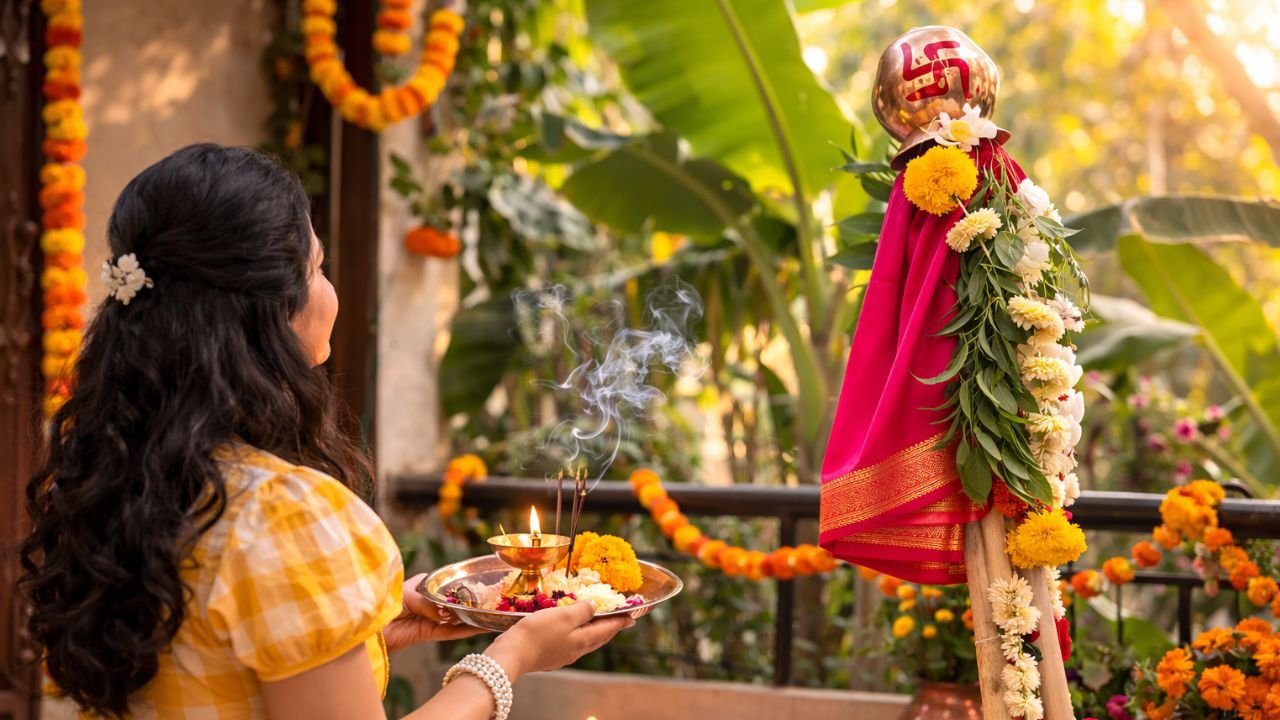
The festival of Gudi Padwa will be celebrated on Thursday, March 19, 2026.
This festival marks the beginning of the Hindu New Year, also known as Chaitra Shukla Pratipada, according to the traditional lunisolar calendar.
Gudi Padwa is mainly celebrated in Maharashtra, Goa, and parts of Gujarat, especially where there is a strong Marathi community.
For many families, the day symbolizes a new beginning, prosperity, and good fortune for the coming year.
Why Gudi Padwa Is Celebrated
Gudi Padwa has strong religious, historical, and cultural meaning.
- Creation of the Universe: According to Hindu beliefs, Brahma created the universe and time on this auspicious day
- Victory of Lord Rama: The festival also celebrates the return of Rama to Ayodhya after defeating Ravana, symbolizing the victory of good over evil
- Maratha Pride: The day is linked with the victories of Chhatrapati Shivaji Maharaj, who is believed to have started the tradition of hoisting the Gudi to celebrate success and unity
- Harvest Festival: Gudi Padwa also marks the end of the Rabi crop season and the beginning of a new agricultural cycle for farmers
How Gudi Padwa Is Celebrated
The festival is recognized by the Gudi flag, which is placed outside homes as a symbol of victory and prosperity.
Maharashtra
In Maharashtra, families celebrate by:
- Hoisting the Gudi flag outside their homes
- Taking a traditional oil bath (Abhyanga Snan)
- Wearing traditional clothes such as Nauvari sarees and kurta-pajamas
- Decorating homes with colorful rangoli
Gujarat
In Gujarat, the festival is connected with the beginning of Chaitra Navratri. While the Gujarati New Year is usually celebrated during Diwali as Bestu Varas, the Marathi community in Gujarat also celebrates Gudi Padwa by hoisting the Gudi and decorating homes with neem and mango leaves.
Rituals and Traditions on Gudi Padwa
1. Early Morning Bath
The day starts with Abhyanga Snan, a ritual oil bath taken before sunrise to purify the body and mind.
2. Home Decoration
Homes are decorated with:
- Mango leaf torans at the entrance
- Colorful rangoli patterns to welcome prosperity
3. Hoisting the Gudi
- A bamboo pole is decorated with a bright silk cloth, neem leaves, mango leaves, a sugar garland (Gathi), and a flower garland
- An inverted copper or silver pot (Kalash) is placed on top
- The Gudi is then raised on the right side of the main entrance
4. Panchang Reading
Many families listen to the Panchang Shravan, where the Hindu calendar predictions for the new year are explained.
Traditional Foods Prepared on Gudi Padwa
Several traditional Maharashtrian dishes are prepared on this day.
- Neem and Jaggery Prasad: A mixture of bitter neem leaves and sweet jaggery is eaten first. It represents the balance of joy and sorrow in life
- Puran Poli: A sweet flatbread stuffed with lentils and jaggery
- Shrikhand Puri: A creamy yogurt dessert often flavored with saffron or mango, served with fried bread
Other Popular Dishes:
- Batata Bhaji
- Katachi Amti (tangy dal)
- Sabudana Vada
Gudi Padwa 2026 Puja Muhurat
Important timings for the festival are:
- Pratipada Tithi Begins: 6:52 AM on March 19, 2026
- Pratipada Tithi Ends: 4:52 AM on March 20, 2026
- Auspicious Puja Window: 7:00 AM to 10:30 AM
- Alternative Puja Time: Before 12:00 PM
Traditionally, the Gudi is hoisted shortly after sunrise to invite positive energy.
Gudi Setup Materials (Samagri List)
To prepare the Gudi and perform the rituals, you will need the following items.
For the Gudi
- Bamboo stick (about 4 to 5 feet long)
- Bright silk cloth with golden border
- Kalash made of copper, silver, or brass
- Marigold garlands and sugar garland (Gathi)
- Neem and mango leaves
For Puja and Decoration
- Rangoli colors or flower petals
- Mango leaf toran for the entrance
- Haldi, Kumkum, Akshata, and Chandan
- Brass diya, ghee or oil, cotton wicks
- Incense sticks and camphor
- Fruits, betel leaves, and betel nuts
Prasad
- Neem leaves
- Jaggery
- Tamarind mixture
Quick Steps to Perform the Gudi Ritual
- Wake up early and take an oil bath
- Wear clean traditional clothes
- Tie the silk cloth to the bamboo stick
- Add the sugar garland, neem leaves, and flowers
- Place the Kalash upside down on top
- Raise the Gudi outside the main entrance
- Apply tilak, light a diya, and offer the neem-jaggery prasad
Gudi Hoisting Mantra
The Gudi is also known as Brahmadhwaj, meaning the flag of Lord Brahma.
While hoisting it, devotees recite this traditional Sanskrit mantra.
Sanskrit:
“ब्रह्मध्वज नमस्तेऽस्तु सर्वाभीष्टफलप्रद।
प्राप्तेस्मिन् वत्सरे नित्यं मद्गृहे मंगलं कुरु॥”
English Transliteration:
Brahmadhvaja namaste’stu sarvabhishta phala prada
Praptesmin vatsare nityam madgruhe mangalam kuru
Meaning:
O Brahmadhwaj, I bow to you. You grant all desired blessings.
In this new year, please bring prosperity and well-being to my home.
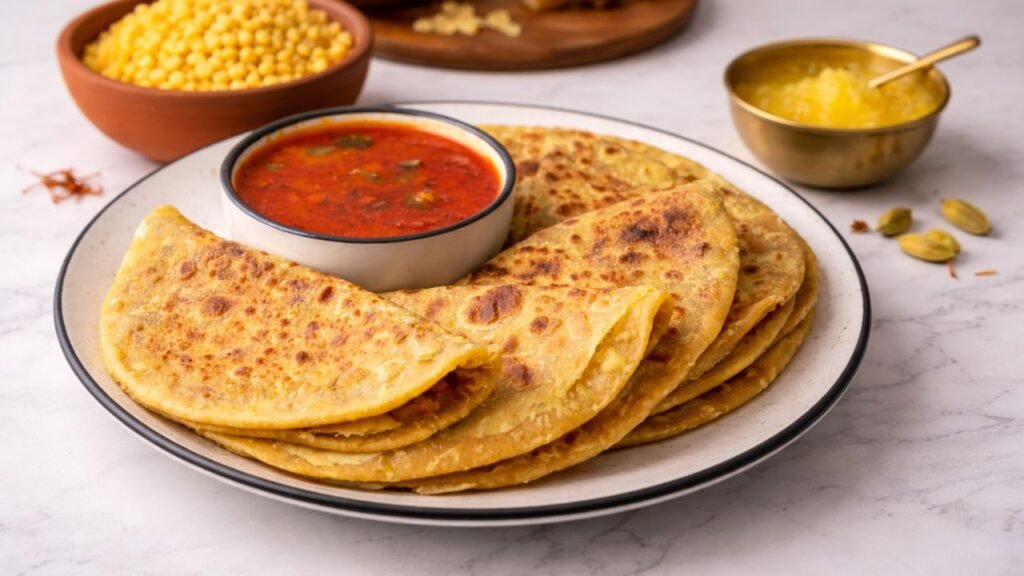
Authentic Puran Poli Recipe
Puran Poli consists of two parts: Puran (sweet filling) and Poli (outer bread).
Ingredients
For the Filling (Puran)
- 1 cup chana dal
- 1 cup grated jaggery
- ½ tsp cardamom powder
- A pinch of nutmeg powder
For the Dough (Poli)
- 1 cup whole wheat flour
- ½ cup all-purpose flour
- 2 tbsp oil
- A pinch of salt
- Turmeric for color (optional)
Step-by-Step Preparation
Prepare the Filling
- Rinse and pressure cook chana dal with water until soft
- Drain the excess water
- Mash the dal and cook it with grated jaggery
- Stir continuously until the mixture thickens
- Add cardamom and nutmeg powder and allow it to cool
Prepare the Dough
- Mix the flour, salt, and turmeric
- Add water gradually and knead into a soft dough
- Add oil and knead again until smooth
- Let the dough rest for 30 to 60 minutes
Assemble and Cook
- Take a small ball of dough and flatten it
- Place the puran filling inside
- Seal the edges and roll gently into a thin circle
- Cook on a hot tawa
- Flip and apply ghee until golden brown
Serving Tip:
Serve hot with melted ghee or warm milk for the best taste.
Frequently Asked Questions
When is Gudi Padwa in 2026?
Gudi Padwa will be celebrated on Thursday, March 19, 2026.
What is the best time for Gudi Padwa Puja?
The auspicious puja window is from 7:00 AM to 10:30 AM on March 19, 2026.
Why is Gudi Padwa celebrated?
The festival marks the Hindu New Year, celebrates the victory of good over evil, and honors the creation of the universe by Brahma.
What is the significance of hoisting the Gudi?
The Gudi represents victory, prosperity, and good fortune. It is believed to ward off evil and invite positive energy into the home.
What foods are traditionally prepared on Gudi Padwa?
Traditional foods include Puran Poli, Shrikhand, and a mixture of neem leaves with jaggery.
What is the Puran Poli recipe?
The recipe includes chana dal and jaggery filling stuffed in a wheat flour dough, cooked on a tawa with ghee.
What materials are needed for the Gudi?
You will need a bamboo stick, bright silk cloth, copper or brass kalash, marigold garlands, sugar garland, neem leaves, and mango leaves.
Which mantra is recited while hoisting the Gudi?
The Brahmadhwaj mantra is recited to seek blessings for prosperity and well-being in the new year.