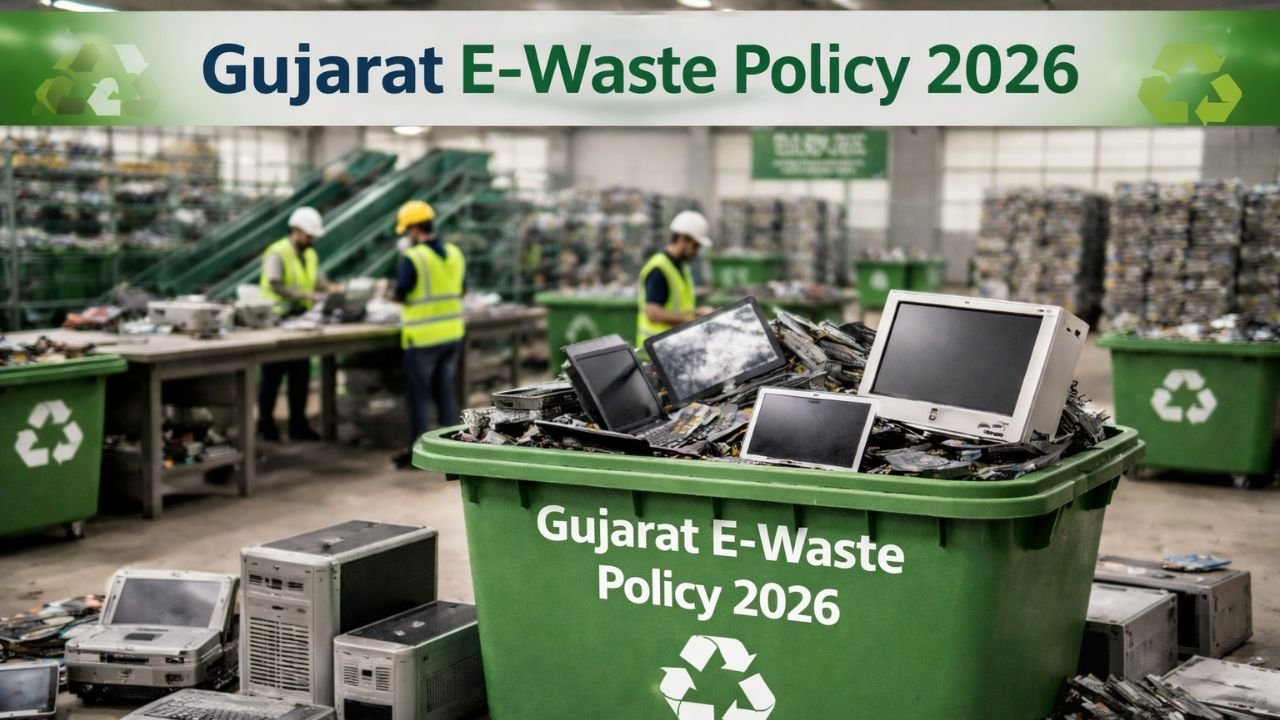
The Gujarat government is all set to roll out a brand new E-Waste Policy in 2026 that promises to overhaul how electronic waste gets collected, recycled, and disposed of across the state. From village-level collection networks to strict data security rules for government gadgets, here’s everything you need to know.
Remember that old computer gathering dust in your storeroom? Or that broken mobile phone you dumped in the regular garbage last month? Well, Gujarat is about to make sure such electronic waste gets handled much more responsibly.
The Gujarat E-Waste Policy 2026 is coming at a time when our love for gadgets is creating a mountain of electronic waste. Currently, Gujarat stands 6th in India when it comes to e-waste collection. Not bad, but the state government believes we can do much better. And this new policy is their roadmap to get there.
Why Gujarat Needed This Policy in the First Place
Let’s face it – we Indians love our electronics. Smartphones, laptops, smart TVs, and all kinds of gadgets have become part of daily life. Gujarat, with its booming industries and rapid digitization, is no exception.
But here’s the problem nobody talks about – what happens to all these devices when they die or become obsolete?
Right now, Gujarat faces some real challenges with e-waste. Rural areas have almost no proper system to collect old electronics. Most people still dump their dead gadgets along with regular trash, not realizing the toxic materials inside. Even government offices haven’t always been careful about disposing old computers and equipment.
The informal sector – local kabadiwalas and scrap dealers – handle most e-waste, often in ways that harm both people and the environment. They extract whatever they can sell, and dump the rest anywhere.
The new policy wants to fix all this by creating a proper, organized system that works for both cities and villages.
Village-Level Collection Network: Taking E-Waste Seriously in Rural Gujarat
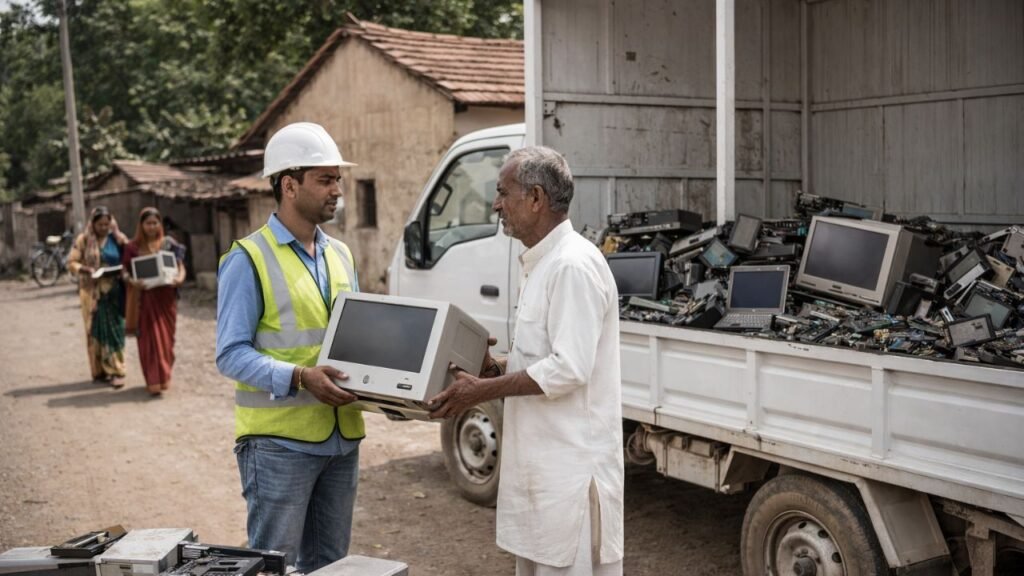
Here’s something really interesting about this policy – it’s not just about Ahmedabad, Surat, or Vadodara. The government is actually planning to take e-waste collection to the village level.
Think about it. Every government school in rural Gujarat has computers now. Panchayat offices use electronic equipment. And rural households own mobile phones, TVs, and other gadgets just like city folks.
But when these things break down, villagers have nowhere to go. The local kabadiwala might take them, but proper disposal? Forget it.
The new policy aims to build a dedicated collection infrastructure that reaches every corner of Gujarat. This means:
- Collection points in villages where people can drop off old electronics
- Regular collection drives in rural areas
- Proper channels to collect e-waste from schools, anganwadis, and government offices in rural locations
This is genuinely a big deal because most e-waste policies in India remain city-centric. By including villages, Gujarat is acknowledging that electronic waste is everyone’s problem, not just an urban issue.
Money Talks: Incentives for Proper Disposal
Let’s be honest – most people won’t go out of their way to dispose electronics properly unless there’s something in it for them. The Gujarat government gets this, which is why they’re planning to offer incentives.
Who can get these incentives?
- Regular households that drop off old electronics at authorized collection centers
- Private recyclers and collection agencies that do good work
- Businesses that choose formal recycling over selling to informal scrap dealers
The idea is simple – make responsible behavior rewarding. If people get a little cash or some benefit for handing over their old gadgets properly, they’re more likely to do it. This could really help reduce illegal dumping and the dangerous practice of burning e-waste to extract metals.
Big Changes in Government Offices: IT Committees and the Condemnation Process
Now here’s something that might sound boring but is actually super important. The government itself is a huge generator of e-waste. Every department, every office, every public sector unit has computers, printers, servers, and other gadgets.
Until now, there hasn’t been a very systematic way of deciding when to discard old equipment. Sometimes offices kept using outdated, inefficient machines. Other times, equipment got lost or misused because nobody was tracking it properly.
The new policy changes all that by requiring every government department to form an IT committee.
What These IT Committees Will Do
These committees won’t be just random people sitting together. They’ll include:
- Technical experts who understand hardware and its condition
- Department officials who know how the equipment is used
- Records management people who maintain proper documentation
Their job? To carefully evaluate every piece of electronic equipment and decide its fate.
They’ll ask questions like: Is this computer still usable? How much longer will it last? Should we repair it or replace it? If we replace it, how do we dispose the old one properly?
The Formal Condemnation Process
Once the IT committee decides that equipment is truly beyond use, it goes through something called “condemnation.” This is just a fancy word for officially declaring something unfit for further use.
But here’s why this matters – condemnation follows strict rules:
- Every piece of equipment gets properly documented
- Nothing gets thrown out without official approval
- Condemned items go only to authorized recyclers
- Everything is tracked from office to recycling facility
This kind of structured process prevents the all-too-common problem of government equipment disappearing or ending up in the wrong hands.
Data Security: Because Your Old Hard Drive Remembers Everything
Here’s something that should concern all of us – when you throw away an old computer or phone, all your personal data might still be on it. For government departments handling sensitive information, this is a massive security risk.
The new policy takes this seriously. Really seriously.
All recyclers who handle government e-waste will have to follow strict data destruction protocols. We’re talking about:
- Complete erasure of all data from storage devices
- Physical destruction of hard drives when necessary
- Certified sanitization processes that leave no recoverable data behind
- Strict verification that no data leakage happens during recycling
This matters because we’ve all heard horror stories of old government computers showing up in scrap markets with sensitive data still intact. The new rules aim to make that a thing of the past.
For regular households, this is important too. When you hand over your old laptop to an authorized recycler under this system, you can be confident that your personal photos, bank details, and other private information won’t end up with strangers.
How Disposal Actually Works: The Recycling Chain
Under the new framework, all e-waste must go through recyclers registered with the Gujarat Pollution Control Board. No shortcuts, no backdoor deals.
Currently, Gujarat has:
- 40 authorized dismantlers and recyclers who are licensed to process e-waste
- 93 authorized producers (companies that make electronics) who participate in e-waste management
That’s not a bad start, but the policy aims to expand both numbers and efficiency. More recyclers, better technology, stricter oversight.
The goal is to create a complete chain – from your home or office, to collection points, to authorized recyclers who actually process the waste properly instead of just extracting valuable metals and dumping the rest.
When Can You Throw It Out? Clear Rules for Equipment Disposal
One smart thing about this policy is that it gives clear guidelines on when electronic equipment should be scrapped. No more confusion or arbitrary decisions.
Standard Lifespan Guidelines
- PCs, servers, and printers: 5 years of use, then evaluate
- Laptops: 4 years, then check condition
The 40% Rule
Here’s a practical guideline – if repairing a piece of equipment costs more than 40% of what it’s worth, it may be declared unfit for further use.
How do they calculate what it’s worth? They use a standard depreciation rate of about 20% per year. So a five-year-old computer has some residual value, but if repair costs exceed 40% of that, it’s probably time to say goodbye.
These clear rules help government departments make consistent decisions. No more one office using ten-year-old computers while another buys new ones every two years.
Beyond Gadgets: Solar E-Waste Gets Attention Too
Here’s something forward-thinking in the policy. While everyone talks about computers and phones, Gujarat is also looking at a growing problem – solar panel waste.
The Gujarat Energy Development Agency (GEDA) has already started working on this. They’ve invited proposals to handle solar panel waste, which will become a massive issue as solar installations across the state start aging.
Solar panels contain valuable materials like silver, silicon, and glass. If we just dump them in landfills, we lose all those resources. But if we recycle them properly, we recover materials and create a circular economy where nothing really goes to waste.
This puts Gujarat ahead of the curve. Most states haven’t even thought about solar e-waste yet, but Gujarat is already planning for it.
What This Means for Regular People Like Us
Okay, so all this policy talk is interesting, but what does it actually mean for you and me?
For starters, disposing your old electronics should become much easier. Instead of wondering what to do with that dead laptop, you’ll have clear options – collection centers, drop-off points, maybe even pickup services.
You might even get some benefit for doing the right thing, thanks to those incentive programs.
When you buy new electronics, you can feel more confident that when they eventually become waste, they’ll be handled properly.
And if you’re someone who cares about the environment, this is genuinely good news. Proper e-waste recycling means less toxic material leaking into our soil and water. Less burning of wires that releases harmful fumes. More recovery of valuable materials instead of mining for new ones.
The Bigger Picture: Economic and Environmental Impact
If implemented well, this policy could do some real good for Gujarat.
Environmental Benefits We Can Expect
- Less hazardous waste dumped in open areas
- Reduced contamination of soil and water from toxic materials like lead and mercury
- Higher recycling rates so fewer resources get wasted
- Proper handling of dangerous components instead of unsafe backyard recycling
Economic Opportunities
The policy could also create new livelihoods:
- Growth in the recycling industry with more formal players
- Jobs in collection, sorting, and processing e-waste
- Investment in new recycling technologies
- Opportunities for entrepreneurs in waste management
Better Governance
For government operations, the benefits are clear:
- Proper tracking of expensive electronic assets
- Reduced loss and misuse of equipment
- Transparent disposal processes
- Better use of taxpayer money
Challenges Ahead: What Could Go Wrong?
Let’s be realistic – no policy works perfectly just because it’s written down. Gujarat will face some real challenges implementing this.
Awareness is a huge one. Most people still don’t think about e-waste as a separate category. Getting them to use formal collection systems will take time and education.
Training is another challenge. Village-level collection networks need people who understand what to collect, how to handle it, and where to send it. That requires proper training programs.
Monitoring recyclers to ensure they actually follow the rules – especially data security protocols – won’t be easy. The pollution control board will need resources and manpower to do this effectively.
Coordination between different government departments is always tricky. Getting all of them to form IT committees and follow consistent procedures will require strong leadership from the top.
What Other States Can Learn from Gujarat
If this policy succeeds, Gujarat could become a model for other states. The focus on rural collection, the structured condemnation process, the attention to data security – these are all elements that other states could adapt.
The solar e-waste initiative is particularly worth watching. As India pushes solar energy nationwide, every state will eventually face the problem of disposing old panels. Gujarat is thinking about this now, which puts them ahead of the curve.
The Bottom Line
The Gujarat E-Waste Policy 2026 isn’t just another government document. It’s a serious attempt to fix a growing problem that affects all of us.
By bringing villages into the formal system, creating clear rules for government disposal, and emphasizing data security, the policy addresses gaps that have existed for years.
Will it work perfectly from day one? Probably not. Implementation always has hiccups. But the direction is right, and the framework is solid.
For Gujarat to move from 6th place in India to the top ranks of e-waste management, execution will be key. Awareness campaigns, training programs, proper monitoring – these will determine whether the policy delivers on its promise.
But one thing is clear – Gujarat is thinking seriously about electronic waste, and that’s good news for everyone who calls this state home.
Frequently Asked Questions About Gujarat E-Waste Policy 2026
Q: When will the Gujarat E-Waste Policy 2026 come into effect?
A: The policy is expected to be introduced during 2026, though exact implementation dates haven’t been announced yet. Government departments will likely need to comply first, with broader public systems rolling out gradually.
Q: How can I dispose my old electronics under the new policy?
A: Once fully implemented, you’ll be able to drop off old electronics at designated collection centers, including village-level collection points. Some areas may also have collection drives. The policy also includes incentives to encourage proper disposal through official channels.
Q: Will I get money for giving away my old gadgets?
A: The policy mentions financial incentives for households that dispose electronics through official channels. The exact amounts and mechanisms haven’t been detailed yet, but the intention is to make proper disposal rewarding.
Q: What happens to my personal data when I give my old devices for recycling?
A: Authorized recyclers under this policy must follow strict data destruction protocols. This includes complete data erasure and, for storage devices, physical destruction when necessary. This applies particularly to government e-waste, but authorized recyclers should follow similar standards for all devices.
Q: How is Gujarat different from other states in e-waste management?
A: Gujarat currently ranks 6th in India for e-waste collection. The new policy aims to improve this by focusing on rural collection networks, structured disposal processes for government assets, and strong data security measures that go beyond what many states require.
Q: What is the “condemnation process” mentioned in the policy?
A: Condemnation is the formal process of declaring electronic equipment unfit for further use. Under the new policy, government departments must form IT committees to evaluate equipment and follow clear guidelines (like the 40% repair cost rule) before condemning assets and sending them to authorized recyclers.
Q: Does the policy cover solar panel waste?
A: Yes, through related initiatives by the Gujarat Energy Development Agency (GEDA). The state is already working on plans to handle solar panel waste, including recovering valuable materials like silver, silicon, and glass from old panels.
Q: What are the penalties for not following the new e-waste rules?
A: While specific penalties under the new policy haven’t been detailed, all e-waste handling must comply with existing environmental laws and Pollution Control Board regulations. Unauthorized disposal or recycling can attract penalties under these laws.
Q: How will rural areas benefit from this policy?
A: The policy specifically includes village-level collection networks, which means rural households and institutions will have formal channels to dispose e-waste. Currently, most rural areas lack such facilities.
Q: Can private recyclers participate in the new system?
A: Yes, but they must be registered with the Gujarat Pollution Control Board. The policy aims to work with authorized recyclers who meet environmental and safety standards, including data security protocols.