The IPL 2026 opening match is not just about RCB vs SRH. It is a clash between two very different ways of playing cricket. On one side, Virat Kohli – discipline, patience, and control. On the other, Abhishek Sharma – fearless, aggressive, and unpredictable.
This is not just a battle between two players. It is a battle between two generations, two mindsets, and two approaches to T20 cricket. Let me break it down in simple words.
Two Generations, Two Mindsets
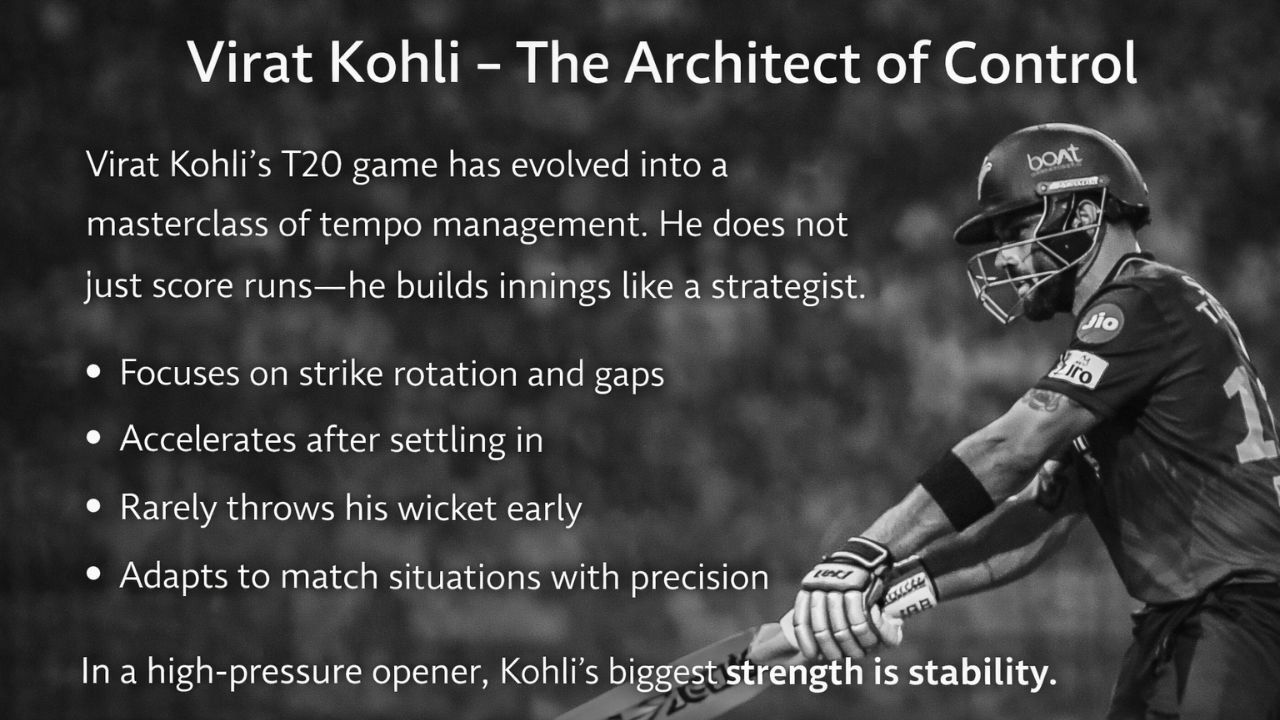
Virat Kohli – The Architect of Control
Virat Kohli’s T20 game has changed over the years. He is not just a batsman anymore. He is a strategist who builds innings like a captain building a plan.
His strengths are simple:
- Focuses on rotating strike and finding gaps
- Settles in before accelerating
- Rarely throws his wicket away early
- Reads match situations and adapts
In a high-pressure opening match, Kohli’s biggest strength is stability. While others attack, he absorbs pressure. He does not let the team collapse. He gives the middle order a platform.
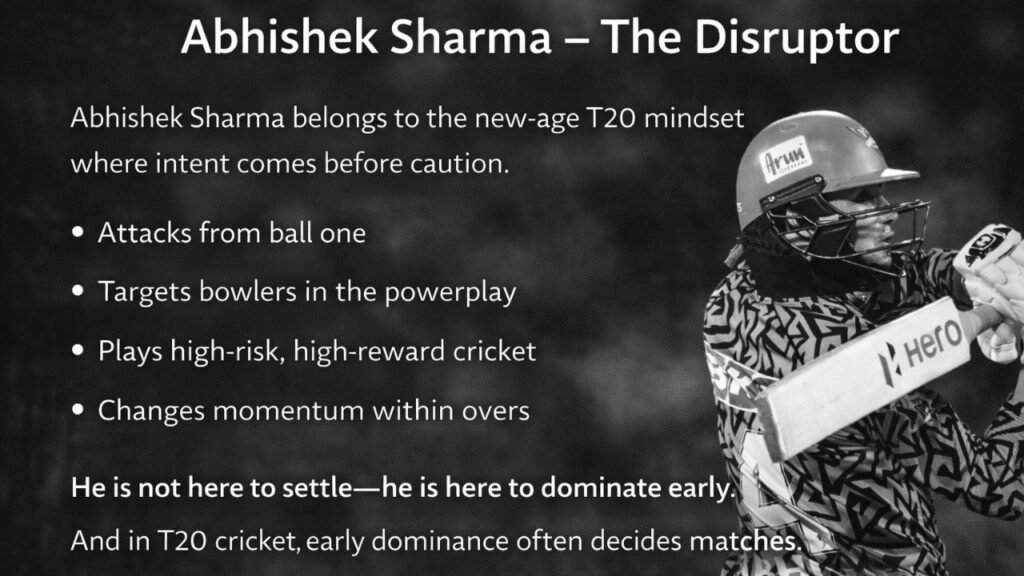
Abhishek Sharma – The Disruptor
Abhishek Sharma belongs to the new generation of T20 cricketers. For him, intent comes before caution.
His style is different:
- Attacks from the first ball
- Targets bowlers in the powerplay
- Plays high-risk, high-reward shots
- Changes the game within a few overs
He is not there to settle. He is there to dominate from ball one. And in T20 cricket, early dominance often decides who wins.
Powerplay Battle: Where the Match Could Be Won
The first six overs are the most important in T20 cricket. This is where the game often gets decided.
If Kohli Dominates the Powerplay:
- RCB gets a solid base of 50 to 60 runs
- Middle order bats freely without pressure
- Pressure shifts to SRH bowlers
If Abhishek Sharma Fires Early:
- SRH could score 70 or more in the powerplay
- RCB is forced into defensive fielding
- Momentum shifts completely toward SRH
This phase is a clash between calculated buildup and explosive disruption.
Strike Rate vs Consistency Debate
This match reflects a big debate in modern cricket. Which is more valuable – consistency or high strike rate?
| Aspect | Virat Kohli | Abhishek Sharma |
| Approach | Anchoring innings | Aggressive hitting |
| Risk Level | Low to medium | High |
| Strike Rate Pattern | Builds gradually | Starts high |
| Role | Stabilizer | Game-changer |
In today’s T20 cricket, teams need both types of players. But the question remains – which approach wins big matches when pressure is highest?
Pressure Handling: The Real Difference
Kohli Under Pressure
Kohli has spent his whole career playing under pressure. He knows how to handle it.
- Reads the game situation
- Controls his emotions
- Delivers in crunch moments
He has built a reputation as one of the best players in high-pressure situations.
Abhishek Under Pressure
Abhishek plays with freedom. He does not carry the weight of expectations.
- Less burden on his shoulders
- Relies on natural strokeplay
- Confidence comes from momentum
But the IPL opener is different. Big crowd. High expectations. Global attention. The real test for Abhishek is this – can fearless cricket survive under pressure?
Tactical Matchups to Watch
Kohli vs SRH Bowlers
Kohli will likely target pace bowlers by finding gaps rather than hitting hard. He will avoid risky shots early and may anchor the innings until the 15th over.
Abhishek vs RCB Bowlers
Abhishek will attack short balls and look to score big in the powerplay. He targets boundaries from the start. His intent is high against fast bowlers.
Psychological Edge
Kohli enters as a champion and leader. He has done this many times before.
Abhishek enters as a rising star with nothing to lose. That can be dangerous for the opponent.
One is protecting a legacy. One is chasing impact.
Venue Factor: M. Chinnaswamy Stadium
The Chinnaswamy Stadium makes this battle even more interesting.
- Short boundaries favor Abhishek’s power hitting
- Fast outfield helps Kohli’s timing
- High-scoring conditions mean small mistakes cost a lot
In simple terms – Kohli benefits from precision, Abhishek benefits from power.
What This Match Symbolizes
This is not just an IPL opener. It reflects how T20 cricket is changing.
- From patience to aggression
- From building innings to instant impact
- From technique to power-based play
Kohli represents the foundation of T20 success. Abhishek represents where T20 cricket is heading.
Possible Match Scenarios
Scenario 1: Kohli Controls the Game
If Kohli anchors the innings well, RCB posts a stable total or chases comfortably. The match goes deep, and experience wins.
Scenario 2: Abhishek Destroys the Powerplay
If Abhishek fires early, SRH dominates from the start. The game becomes one-sided, and aggression wins.
Scenario 3: Balanced Clash
Kohli anchors the innings. Abhishek explodes in bursts. The match is decided in the final overs.
This is the most likely scenario – and the most exciting.
Final Analysis
Virat Kohli brings reliability, composure, and match awareness. He has been doing this for years. His game is built on control.
Abhishek Sharma brings unpredictability, aggression, and explosive potential. He represents the new wave of T20 batting.
The IPL 2026 opener asks a simple question – do you win by controlling the game, or by breaking it open early?
Conclusion
When the first ball is bowled in IPL 2026, all eyes will be on two very different players with two very different styles.
Kohli will try to build the match. Abhishek will try to flip the match.
Somewhere between control and chaos, the result will be decided. That is what makes this contest so exciting.
Frequently Asked Questions
Q: Who is the better player – Virat Kohli or Abhishek Sharma?
A: There is no simple answer. Kohli has experience and consistency. Abhishek has fearless power. Both bring different strengths to the game.
Q: What makes this contest special?
A: It represents two different approaches to T20 cricket – control vs aggression, experience vs instinct, legacy vs rise.
Q: How important is the powerplay in this match?
A: Very important. If Abhishek fires early, SRH gets momentum. If Kohli controls the powerplay, RCB gets a solid base.
Q: What are Abhishek Sharma’s strengths?
A: He attacks from ball one, targets bowlers early, and can change the game within a few overs.
Q: What are Virat Kohli’s strengths in T20?
A: He rotates strike well, absorbs pressure, builds innings, and delivers in high-pressure situations.
Q: How does the Chinnaswamy Stadium affect this contest?
A: Short boundaries help power hitters like Abhishek. Fast outfields help players like Kohli who rely on timing.
Q: Which approach wins more matches in T20?
A: Both approaches have value. Teams need stability and explosiveness. The best teams have a mix of both.