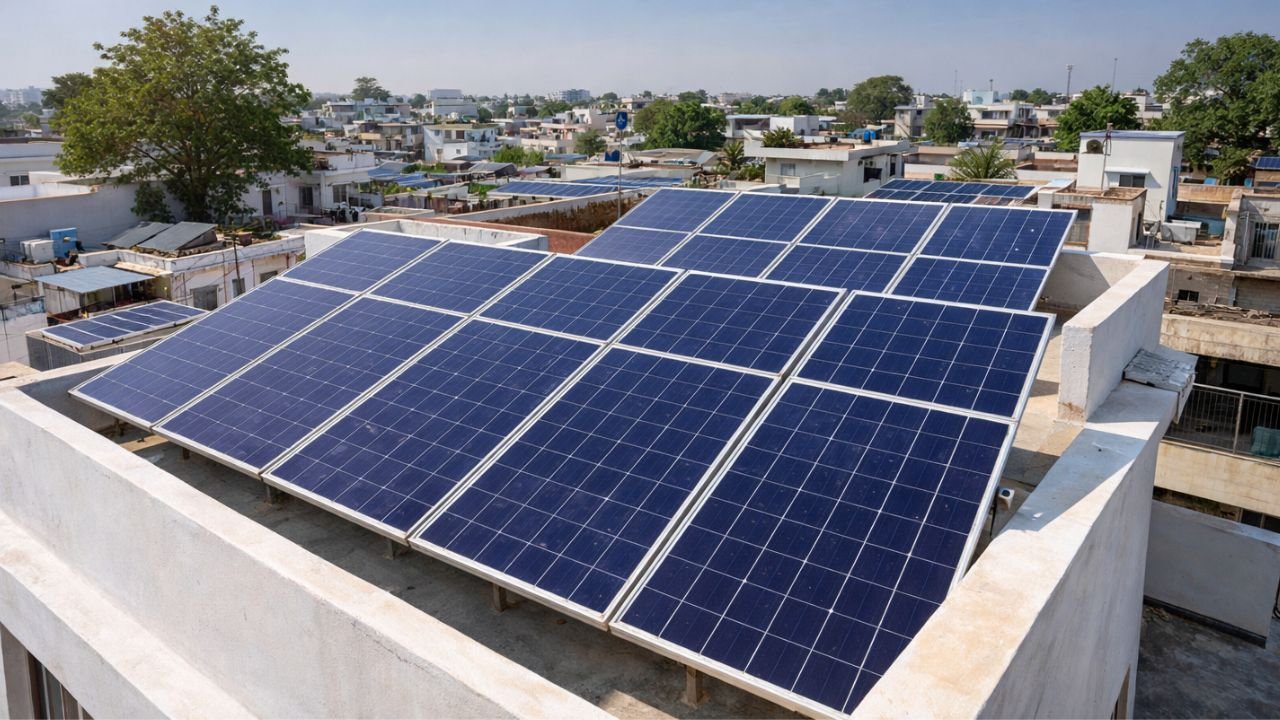
The PM Surya Ghar: Muft Bijli Yojana is changing how Indian households get electricity. As of March 2026, more than 26 lakh homes have installed rooftop solar panels under this scheme. This is not just about free electricity – it is about lower bills, energy independence, and a cleaner future.
The government launched this scheme to help families reduce their electricity bills while also promoting clean energy. With 26 lakh installations already done, the program is moving fast toward its target of powering one crore homes.
Let me explain what this scheme offers and how it works.
What is PM Surya Ghar Yojana?
The scheme was launched by the Government of India to encourage households to install rooftop solar panels. The main benefits are:
- Up to 300 units of free electricity per month
- Financial subsidy to cover installation costs
- Reduced dependence on traditional power sources
The goal is to reach one crore households, making it one of the largest residential solar programs in the world.
Major Achievement: 26 Lakh Installations
Crossing 26 lakh installations is a big deal. Here is what that number means:
- 2.6 million homes now have solar rooftops
- 9.56 GW of solar capacity added to the grid
- Faster adoption compared to earlier solar schemes
This shows that more Indian families are choosing solar power. The awareness is growing, and the benefits are becoming clear.
Key Benefits for Consumers
1. Free Electricity up to 300 Units
Households can get up to 300 units of free electricity per month. For many families, this means their electricity bill becomes zero or very low. Any extra electricity used beyond 300 units is charged at normal rates.
2. Attractive Subsidy Structure
The scheme offers direct financial support to make solar installation affordable.
| System Size | Subsidy Amount |
| 1 kW | ₹30,000 |
| 2 kW | ₹60,000 |
| 3 kW and above | Up to ₹78,000 |
For a typical home, a 3 kW system is often enough to cover most electricity needs.
3. Additional State Subsidies
Some states offer extra incentives on top of the central subsidy. For example, Gujarat provides ₹10,000 to ₹20,000 per kW. This further lowers the upfront cost for homeowners.
4. Income Through Net Metering
If your solar panels produce more electricity than you use, you can sell the surplus back to the power company. This is called net metering. It means you can actually earn money from your solar system over time.
Application Process: Step-by-Step
Applying for the scheme is simple. Homeowners can apply through the official portal.
Step 1: Registration
Select your state and electricity distribution company (DISCOM). Enter your consumer details.
Step 2: Application
Apply for rooftop solar installation through the portal.
Step 3: Feasibility Approval
The DISCOM checks if your rooftop is suitable for solar panels. They verify technical feasibility.
Step 4: Installation
Choose from empaneled vendors approved by the government. They install the system.
Step 5: Inspection and Subsidy
After installation, officials inspect the system. A net meter is installed. The subsidy is then credited to your bank account through Direct Benefit Transfer (DBT).
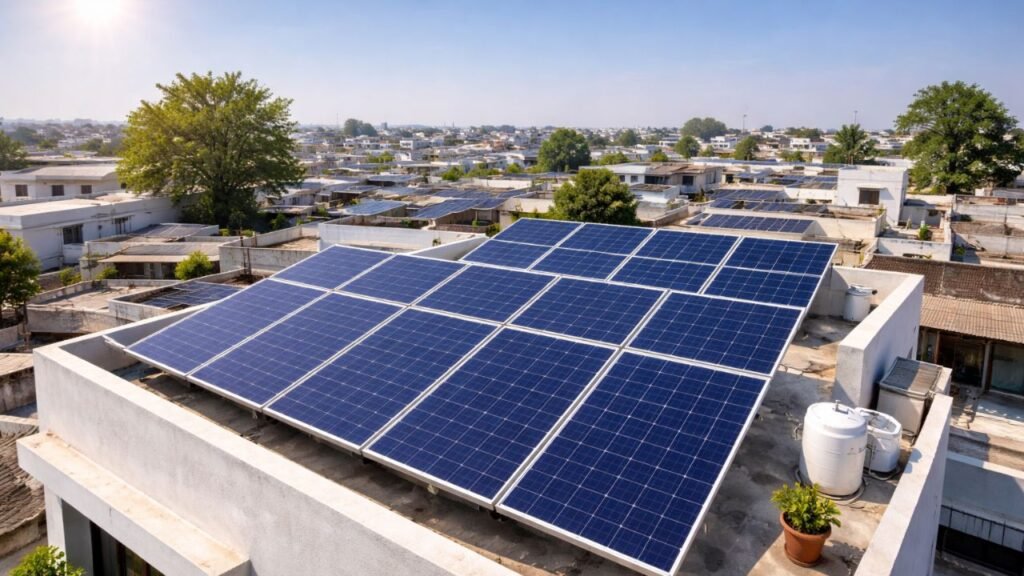
Increased Budget Allocation
The government has allocated ₹22,000 crore for this scheme. This money will help speed up installations and reach more households.
New Target for 2026
The Ministry of New and Renewable Energy aims to reach 40 to 55 lakh installations by the end of 2026. With the current momentum, this target seems achievable.
Compliance Rules
To qualify for subsidies, panels must meet certain requirements:
- Domestic Content Requirement (DCR) – panels must be made in India
- ALMM (Approved List of Models and Manufacturers) – modules must be from approved manufacturers
These rules support Indian solar manufacturing and ensure quality standards.
Why This Scheme is Important for India
Reducing Electricity Costs
Households save thousands of rupees every year. With electricity tariffs rising, solar protects families from increasing costs.
Boosting Renewable Energy
India has set clean energy targets for the coming years. Rooftop solar helps meet those targets while reducing carbon emissions.
Strengthening Energy Independence
When homes generate their own electricity, the country depends less on imported fossil fuels. It is a step toward energy self-reliance.
Creating Jobs
The solar industry is growing fast. More installations mean more jobs in installation, maintenance, and manufacturing.
Challenges and Reality Check
Despite strong progress, some challenges remain:
- Awareness gaps in rural areas – many families do not know about the scheme
- Initial installation costs – even after subsidy, some families find it hard to pay upfront
- DISCOM approval delays – in some regions, approvals take longer than expected
However, as more families adopt solar and share their experiences, these issues are gradually being addressed.
Future Outlook
The PM Surya Ghar Yojana is expected to:
- Accelerate rooftop solar adoption across India
- Make India a global leader in residential solar energy
- Transform households from electricity consumers into electricity producers
With strong government support, increasing awareness, and falling solar panel costs, the scheme is likely to exceed its targets.
Final Analysis
The PM Surya Ghar Yojana is more than a subsidy scheme. It is a long-term reform in India’s energy system.
By combining financial incentives, technology adoption, and policy support, India is moving toward a future where clean, affordable electricity becomes accessible to every household.
For families, it means lower bills and extra income. For the country, it means cleaner energy and greater self-reliance.
Conclusion
The PM Surya Ghar Yojana has crossed 26 lakh installations as of March 2026. With 9.56 GW of solar capacity added and a ₹22,000 crore budget, the scheme is on track to reach its goal of one crore homes.
Families can get up to 300 units of free electricity per month, along with subsidies up to ₹78,000 for installing solar panels. States like Gujarat offer additional incentives, making it even more affordable.
The application process is simple – register online, apply, get feasibility approval, install through empaneled vendors, and receive the subsidy directly in your bank account.
This is not just about saving money. It is about creating a cleaner, more independent energy future for India.
Frequently Asked Questions
Q: What is PM Surya Ghar Yojana?
A: It is a government scheme that provides subsidies for rooftop solar installations and offers up to 300 units of free electricity per month.
Q: How many installations have been completed so far?
A: As of March 2026, over 26 lakh households have installed solar panels under the scheme.
Q: What is the total solar capacity added?
A: The scheme has added 9.56 GW of solar capacity to the grid.
Q: How much subsidy can I get?
A: For a 1 kW system, you get ₹30,000. For 2 kW, you get ₹60,000. For 3 kW and above, you get up to ₹78,000.
Q: Do states offer additional benefits?
A: Yes, some states like Gujarat offer extra subsidies of ₹10,000 to ₹20,000 per kW.
Q: What is net metering?
A: Net metering allows you to sell surplus electricity back to the grid, earning money from your solar system.
Q: How can I apply for the scheme?
A: You can apply through the official PM Surya Ghar portal by registering with your state and DISCOM details.
Q: What is the target for 2026?
A: The government aims to reach 40 to 55 lakh installations by the end of 2026.
Q: Are there rules about which solar panels can be used?
A: Yes, panels must meet Domestic Content Requirement (DCR) and be from ALMM-approved manufacturers to qualify for subsidy.
Q: What are the main challenges of the scheme?
A: Challenges include awareness gaps in rural areas, upfront costs even after subsidy, and approval delays in some regions.