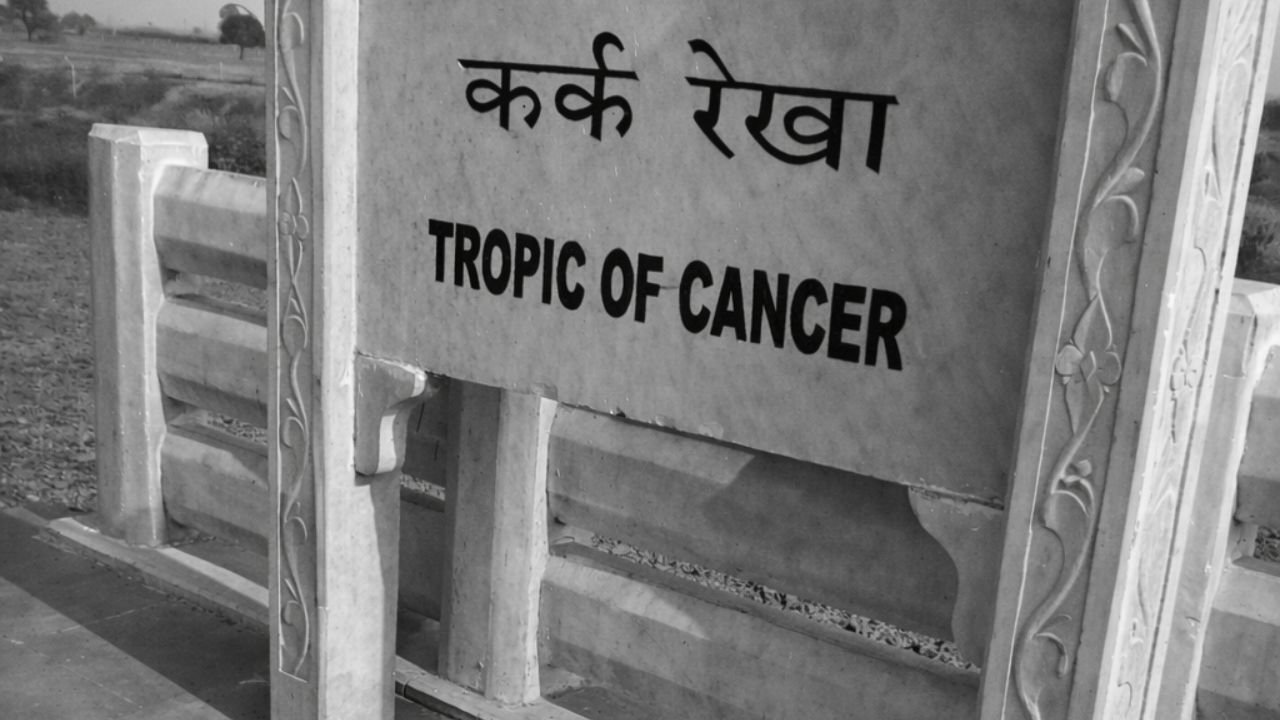
Bhupendra Patel inaugurated India’s first-of-its-kind Tropic of Cancer Science Park on March 11, 2026, in Salal village of Sabarkantha district. Built exactly on the geographical line that marks an important latitude, this unique destination combines education, tourism, and scientific awareness in one place.
If you’ve ever struggled to understand why seasons change or what the Tropic of Cancer actually means on a map, here’s your chance to see it all come to life.
The park sits right on the Tropic of Cancer line in Gujarat, making it the only facility of its kind in the country. For students who find geography textbooks boring, for families looking for a meaningful weekend trip, or for anyone curious about how our planet works – this place has something to offer.
Let’s take a closer look at what makes this science park special and why it matters for Gujarat and beyond.
What Makes This Science Park Different From Anything You’ve Seen Before
We’ve all visited parks. Gardens, playgrounds, maybe a science museum or two. But this one is fundamentally different.
The Tropic of Cancer Science Park isn’t just a collection of science exhibits placed inside a building. It’s built exactly on the latitude line itself. When you stand in certain parts of the park, you’re literally standing on the Tropic of Cancer.
For those who need a quick refresher – the Tropic of Cancer is an imaginary line around the Earth at approximately 23.5 degrees north latitude. This is the northernmost point where the sun appears directly overhead at noon during the June solstice. It’s a fundamental concept in geography that explains seasons, climate zones, and even why different parts of the world experience sunlight differently.
Most of us learned this in school and forgot about it. This park brings that concept to life through real installations you can see, touch, and experience.
The idea is simple but powerful – instead of telling people about geography, show them. Let them stand on the line. Let them see how the sun behaves at this specific latitude. Let them understand through experience rather than memorization.
Key Features and Facilities You’ll Find at the Park
The park spreads across 5,930 square meters, which is roughly one and a half acres. It’s not enormous, but it’s designed efficiently to pack in a complete learning experience. Every structure and exhibit serves a purpose.
The Iconic Tropic of Cancer Tower
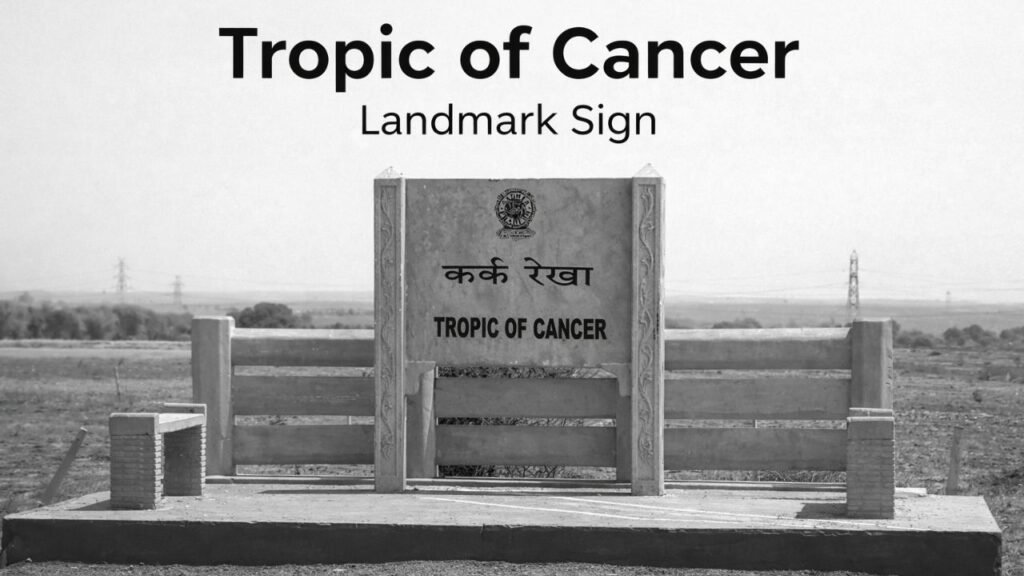
This is the centerpiece of the park, and you can’t miss it. The tower stands 25 meters high and 8 meters wide, marking the exact passage of the Tropic of Cancer line.
Think of it as a giant landmark that does two things. First, it’s a visual marker – you can see it from a distance, and it tells you immediately that you’ve reached a place with geographical significance. Second, it’s an educational tool. When you stand near it, you understand that this spot on Earth has a specific relationship with the sun that places further north or south don’t share.
For school children learning about latitudes and longitudes, seeing a physical marker of the Tropic of Cancer makes the concept concrete. It’s no longer an abstract line on a map. It’s a real place they’ve visited.
The Large Astronomical Sundial
Here’s something you don’t see every day. The park features a precision sundial that does more than just tell time.
This installation helps visitors understand:
- How ancient civilizations measured time before clocks existed
- How the sun’s position changes throughout the day
- How solar positioning works at this specific latitude
- The relationship between time, shadow, and Earth’s rotation
For astronomy enthusiasts, this is fascinating. For regular visitors, it’s an eye-opener. Most of us never think about why shadows change length during the day or why noon doesn’t always mean the sun is directly overhead. The sundial makes these concepts visible and understandable.
Interactive Exhibition Galleries
The indoor exhibition hall spans around 800 square meters and houses four major sections. Each section tackles a different area of science, making it valuable for students studying various subjects.
Physics Section
This part explains fundamental laws that govern our universe. Motion, gravity, how planets move – these concepts are presented through displays that make them accessible. Instead of formulas on a blackboard, visitors see demonstrations of how things work.
Engineering Section
Science isn’t just about understanding nature. It’s about applying that understanding to solve problems. This section shows how scientific theories become real-world applications. From simple machines to complex systems, visitors see how engineering builds on scientific principles.
Geography Section
This is where the park’s location really shines. The geography section focuses on Earth’s coordinates, latitude lines, and specifically why the Tropic of Cancer matters. Visitors learn about the significance of 23.5 degrees north and how this line affects climate, seasons, and life across the planet.
Life Sciences Section
The sun doesn’t just affect temperature. It shapes entire ecosystems. This section explores how sunlight and climate influence:
- What plants grow where
- How animals adapt to different conditions
- Why human settlements developed differently in various latitude zones
- The relationship between geography and life
Educational Focus: Why This Park Matters for Students
The park’s primary audience is clearly students, and the design reflects this priority.
Here’s what students can understand better after visiting:
Earth-Sun Relationships
The tilt of Earth’s axis, the way sunlight hits different parts of the planet, why the tropics exist – these concepts become clear when you see them demonstrated.
Seasonal Changes
Why do we have summer and winter? Why are seasons opposite in the northern and southern hemispheres? The park’s location on the Tropic of Cancer makes these explanations concrete.
Planetary Tilt and Its Impact
Earth isn’t straight up and down. It’s tilted at about 23.5 degrees. That tilt creates the Tropic of Cancer and Tropic of Capricorn. Standing on the line makes this abstract fact feel real.
The interactive displays and infographics throughout the park turn learning into an experience. Students aren’t just reading information. They’re seeing, touching, and experiencing scientific principles in action.
Science Tourism: A New Destination on Gujarat’s Map
Located on National Highway-48, the Ahmedabad–Himmatnagar highway, the park is easy to reach. This accessibility means it’s not just for local visitors. Anyone traveling between Ahmedabad and northern Gujarat can stop by.
The park represents a growing trend in India – science tourism. People travel for many reasons. Religion, adventure, relaxation, shopping. But traveling to learn something new? That’s gaining popularity, especially among families with school-going children.
For a weekend trip from Ahmedabad or surrounding areas, the Tropic of Cancer Science Park offers:
- A meaningful destination with educational value
- Something different from typical tourist spots
- A chance for children to learn while having fun
- Photo opportunities at a unique geographical location
School trips will likely become regular here. Imagine a geography teacher bringing students to the exact spot they’ve been studying in class. That’s powerful learning.
Development Details: How the Park Came to Be
The project reflects Gujarat’s investment in combining education with infrastructure.
Project Cost and Area
The park cost ₹8 crore to develop – a significant investment in science education infrastructure. It covers 5,930 square meters, roughly 1.5 acres. While compact, the space is used efficiently to deliver maximum learning value.
Managing Authority
The Gujarat Council on Science and Technology (GUJCOST) developed and manages the park. GUJCOST operates under the state’s Department of Science and Technology and has a strong track record of promoting science education across Gujarat.
For those familiar with GUJCOST’s work, this park fits their mission perfectly – making science accessible, engaging, and relevant to ordinary people.
Visitor Information: Planning Your Trip
If you’re thinking of visiting, here’s what you need to know.
Location
Salal Village, Prantij Taluka
Sabarkantha District, Gujarat
Situated on NH-48 (Ahmedabad–Himmatnagar Highway)
The highway location makes it easy to find and access. You don’t need to navigate narrow village roads or deal with difficult terrain.
Timings
The park is open daily from 9:00 AM to 6:00 PM. This schedule works well for day trips. You can start in the morning, spend a few hours exploring, and still have time for nearby attractions.
Accessibility
The designers thought about inclusive access. The park features:
- Wheelchair-accessible entrances and pathways
- Easy parking facilities
- Design that accommodates visitors of all ages
Whether you’re bringing young children, elderly parents, or family members with mobility challenges, the park should work for everyone.
Core Attractions You Absolutely Should Not Miss
With limited time, focus on these highlights.
The Tropic of Cancer Landmark Tower
This is the heart of the park. Stand here, take photos, and absorb the fact that you’re at a significant geographical point on Earth. For students, it’s a memory that will stick longer than any textbook diagram.
Interactive Science Galleries
Don’t rush through the indoor exhibition hall. The hands-on exhibits are designed to make you understand concepts through interaction. Take time with each section, especially if you have children with you.
The Precision Sundial
This isn’t just a decorative garden sundial. It’s a working scientific instrument. Spend time understanding how it works. If possible, visit at different times of day to see how shadows move.
Nearby Attractions for a Complete Day Out
The Tropic of Cancer Science Park works well as part of a larger trip. Several attractions sit within reasonable distance.
Mahudi Jain Temple
This famous temple draws visitors for its beautiful architecture and the unique “Sukhadi” prasad – a sweet offering that devotees receive. If you’re making a day trip, combining science with spirituality makes for a rich experience.
Tirupati Rushivan Adventure Park
For families with children, this adventure park offers rides, water attractions, and entertainment. After the educational experience at the science park, kids can burn off energy here.
Indroda Nature Park
Often called India’s Jurassic Park, Indroda Nature Park features dinosaur fossil displays, a zoo, and nature trails. It’s perfect for combining education with recreation. The dinosaur connection is particularly exciting for children.
Why This Park Matters for Gujarat and Beyond
The Tropic of Cancer Science Park isn’t just another tourist attraction. It represents something bigger.
Promoting Scientific Awareness
India needs more citizens who understand science. Not necessarily to become scientists, but to think rationally, question things, and make informed decisions. Parks like this build scientific temper in an organic, enjoyable way.
Encouraging Experiential Learning
Research consistently shows that people learn better by doing than by reading or listening. This park embraces that principle fully. Every exhibit encourages interaction.
Boosting Educational Tourism
Gujarat already attracts tourists for many reasons – business, pilgrimage, heritage, beaches. Adding educational destinations diversifies the tourism portfolio and attracts different types of visitors.
Future Potential: What This Park Could Become
If managed well, the park has tremendous potential.
STEM Inspiration
For some students, a visit here could spark genuine interest in science, technology, engineering, or mathematics. When abstract concepts become concrete, they’re more likely to capture young imaginations.
National and International Visitors
As word spreads, the park could attract visitors from across India and even abroad. Geography enthusiasts, science teachers, curious travelers – all have reasons to visit.
A Model for Other States
If this park succeeds, other states with geographical significance might develop similar attractions. Imagine a park on the Equator in southern India, or on the Tropic of Capricorn if it passed through the country. The concept could spread.
Conclusion
The Tropic of Cancer Science Park opening on March 11, 2026 marks a significant moment for science education in Gujarat and India.
By building exactly on the Tropic of Cancer line, the park turns an abstract geographical concept into something real and tangible. Visitors can stand on the line, see how the sun behaves at this latitude, and understand principles they’ve only read about in books.
For students, it’s a field trip destination that makes learning stick. For families, it’s a weekend outing with substance. For tourists, it’s something genuinely unique – you won’t find another park quite like this anywhere in India.
The ₹8 crore investment, the 25-meter tower, the precision sundial, the four exhibition galleries – all of it adds up to a facility that combines education, tourism, and scientific awareness in a way few places manage.
If you’re in Gujarat or planning a visit, the Tropic of Cancer Science Park deserves a spot on your itinerary. Whether you’re 8 or 80, there’s something here that will make you look at our planet a little differently.
Frequently Asked Questions About Tropic of Cancer Science Park
Q: Where exactly is the Tropic of Cancer Science Park located?
A: The park is in Salal village, Prantij Taluka, Sabarkantha district, Gujarat. It sits on National Highway-48, the Ahmedabad–Himmatnagar highway.
Q: Who inaugurated the park and when?
A: Bhupendra Patel inaugurated the park on March 11, 2026.
Q: What is unique about this science park?
A: It’s India’s first science park built exactly on the Tropic of Cancer line. This geographical location makes it unique for demonstrating Earth-sun relationships and latitude concepts.
Q: What are the park’s timings?
A: The park is open daily from 9:00 AM to 6:00 PM.
Q: Is the park accessible for elderly or disabled visitors?
A: Yes. The park features wheelchair-accessible entrances and pathways, along with easy parking facilities.
Q: How much does it cost to develop the park?
A: The project cost ₹8 crore to develop.
Q: Who manages the park?
A: The Gujarat Council on Science and Technology (GUJCOST) manages the park under the state’s Department of Science and Technology.
Q: What are the main attractions inside the park?
A: The main attractions include the 25-meter Tropic of Cancer tower, a precision astronomical sundial, and four interactive exhibition galleries covering physics, engineering, geography, and life sciences.
Q: Is the park suitable for young children?
A: Yes. The interactive exhibits and open spaces work well for children. School trips are expected to be common visitors.
Q: What other attractions are nearby?
A: Nearby attractions include Mahudi Jain Temple, Tirupati Rushivan Adventure Park, and Indroda Nature Park with its dinosaur exhibits.
Q: How large is the park?
A: The park covers 5,930 square meters, approximately 1.5 acres.
Q: Do I need to book tickets in advance?
A: This information wasn’t specified in the announcement. It’s best to check with GUJCOST or local tourism sources for current booking requirements.