In April 2026, a viral innovation from Uttarakhand has caught national attention – a cow dung-based natural gas cylinder reportedly priced at just ₹500. Promoted as a low-cost and eco-friendly alternative to LPG, the idea has sparked curiosity, optimism, and skepticism across India.
This article breaks down the specifications, real-world feasibility, and ground reality of this trending development. The Cow Dung Gas Cylinder India 2026 concept has generated significant interest among consumers looking for affordable fuel alternatives.
What Is This Biogas Cylinder Innovation?
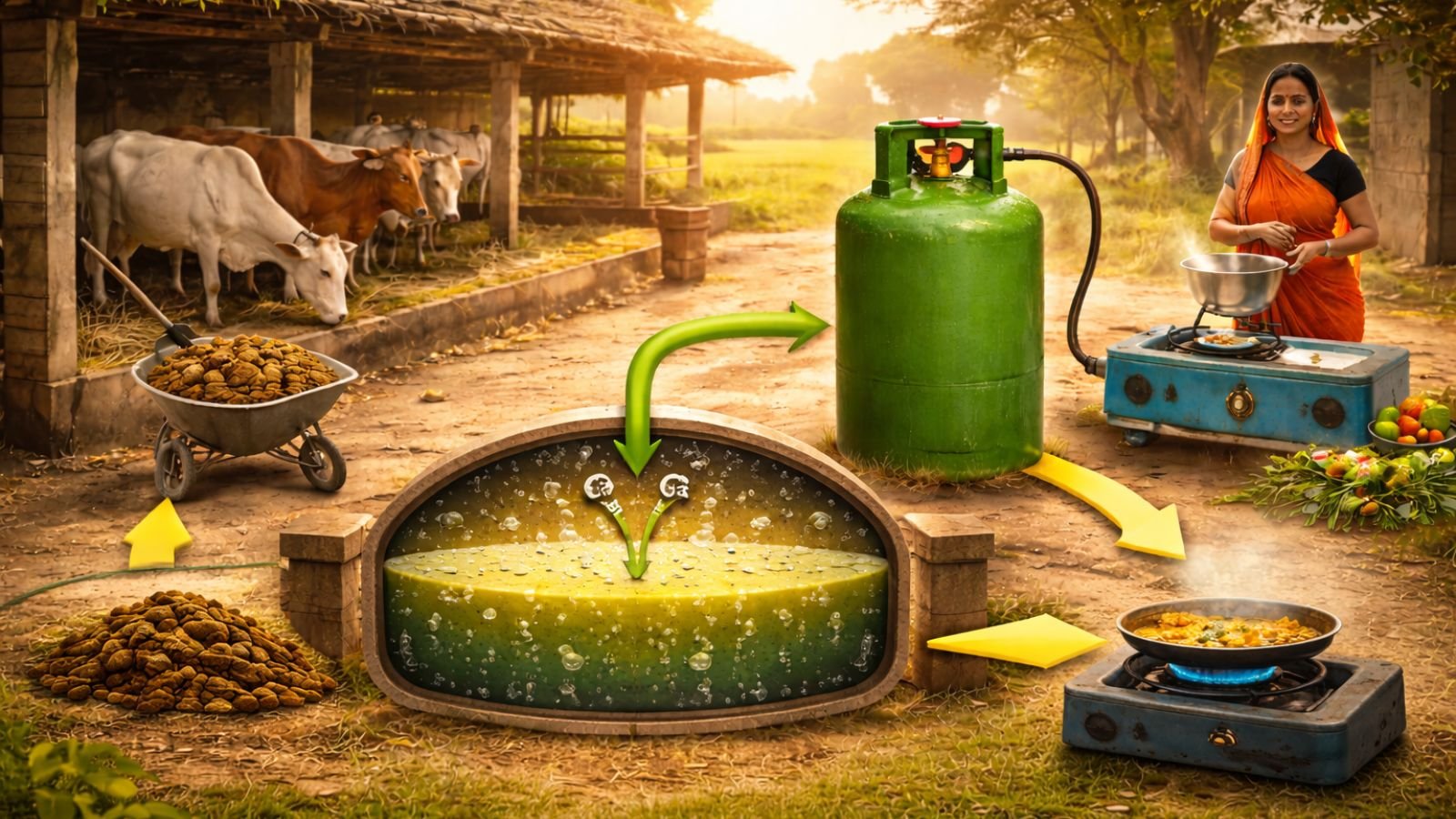
The concept involves producing biogas (mainly methane) from cow dung using anaerobic digestion and storing it in portable cylinders for household use. Unlike traditional LPG, this fuel is renewable, locally produced, and environmentally friendly.
The initiative reportedly comes from grassroots innovators and aligns with India’s push toward sustainable energy solutions. This biogas innovation India represents a potential shift in how households think about cooking fuel.
Key Specifications of the Cylinder
According to widely shared reports:
- Capacity: 18 kg of usable biogas
- Total Weight: Around 30 kg
- Retail Price: Approx. ₹500
- Fuel Type: Methane-rich biogas from cow dung
Compared to standard LPG cylinders (₹800 to ₹1,100), this appears significantly cheaper.
Why This Innovation Is Trending
Several real-world factors have contributed to the sudden popularity of this idea:
1. LPG Supply Concerns
Recent supply disruptions and price volatility have increased interest in alternative fuels, especially in urban areas like Mumbai and Bengaluru.
2. Regional Energy Challenges
In states like Uttarakhand, local governments have been exploring alternatives due to pressure on LPG distribution systems.
3. Government Sustainability Push
The concept aligns with schemes like GOBAR-DHAN scheme, which promotes converting organic waste into biogas and fertilizer.
Reality Check: Is the ₹500 Cylinder Practical?
While the idea is promising, experts highlight several important considerations. The ₹500 gas cylinder concept requires careful evaluation before widespread adoption.
Limited Availability
Currently, this appears to be a localized or experimental initiative. Not yet available through nationwide distribution channels.
Lack of Official Certification
No formal certification or standardized pricing has been issued by regulatory authorities. Safety, storage, and transport standards are still unclear.
Infrastructure Challenges
Compressing and storing biogas in portable cylinders requires advanced technology and safety systems. Most biogas in India is still used via pipeline systems from community plants.
How Biogas Actually Works
Biogas production involves:
- Collecting organic waste (cow dung, food waste)
- Breaking it down in oxygen-free conditions
- Producing methane gas
- Using the gas for cooking or energy
This process is already widely used in rural India through gobar gas plants, but scaling it into portable cylinders is more complex.
Advantages of Biogas Cylinders
- Lower fuel cost compared to LPG
- Renewable and eco-friendly
- Reduces waste and pollution
- Supports rural self-sufficiency
Key Limitations
- Storage and transport safety concerns
- Lack of large-scale infrastructure
- Inconsistent gas production depending on input
- Not yet commercially standardized
Final Verdict
The ₹500 cow dung gas cylinder is an innovative and inspiring concept, but currently remains experimental rather than mainstream. While it aligns perfectly with India’s sustainability goals, widespread adoption will require:
- Government certification
- Standardized pricing
- Scalable infrastructure
- Safety regulations
For now, it should be viewed as a promising future solution, not an immediate replacement for LPG.
Conclusion
India’s energy landscape is evolving, and innovations like biogas cylinders highlight the potential of waste-to-energy solutions. However, practical implementation at scale will take time.
Consumers should stay informed and rely on verified sources and certified products before adopting such alternatives.
Frequently Asked Questions
Q1. What is the cow dung gas cylinder reportedly priced at ₹500?
A1. It is a biogas cylinder concept from Uttarakhand that produces methane-rich fuel from cow dung through anaerobic digestion, promoted as an eco-friendly and low-cost alternative to LPG.
Q2. What are the key specifications of this biogas cylinder?
A2. According to reports, the cylinder has an 18 kg usable biogas capacity, weighs approximately 30 kg, and is priced at around ₹500.
Q3. Is the ₹500 cow dung gas cylinder commercially available?
A3. Currently, this appears to be a localized or experimental initiative. It is not yet available through nationwide distribution channels and lacks formal government certification.
Q4. What are the main challenges facing biogas cylinder adoption?
A4. Key challenges include storage and transport safety concerns, lack of large-scale infrastructure, inconsistent gas production, and no standardized pricing or safety regulations.
Q5. How does biogas production work?
A5. Biogas is produced by collecting organic waste (cow dung or food waste), breaking it down in oxygen-free conditions to produce methane gas, which can then be used for cooking or energy.